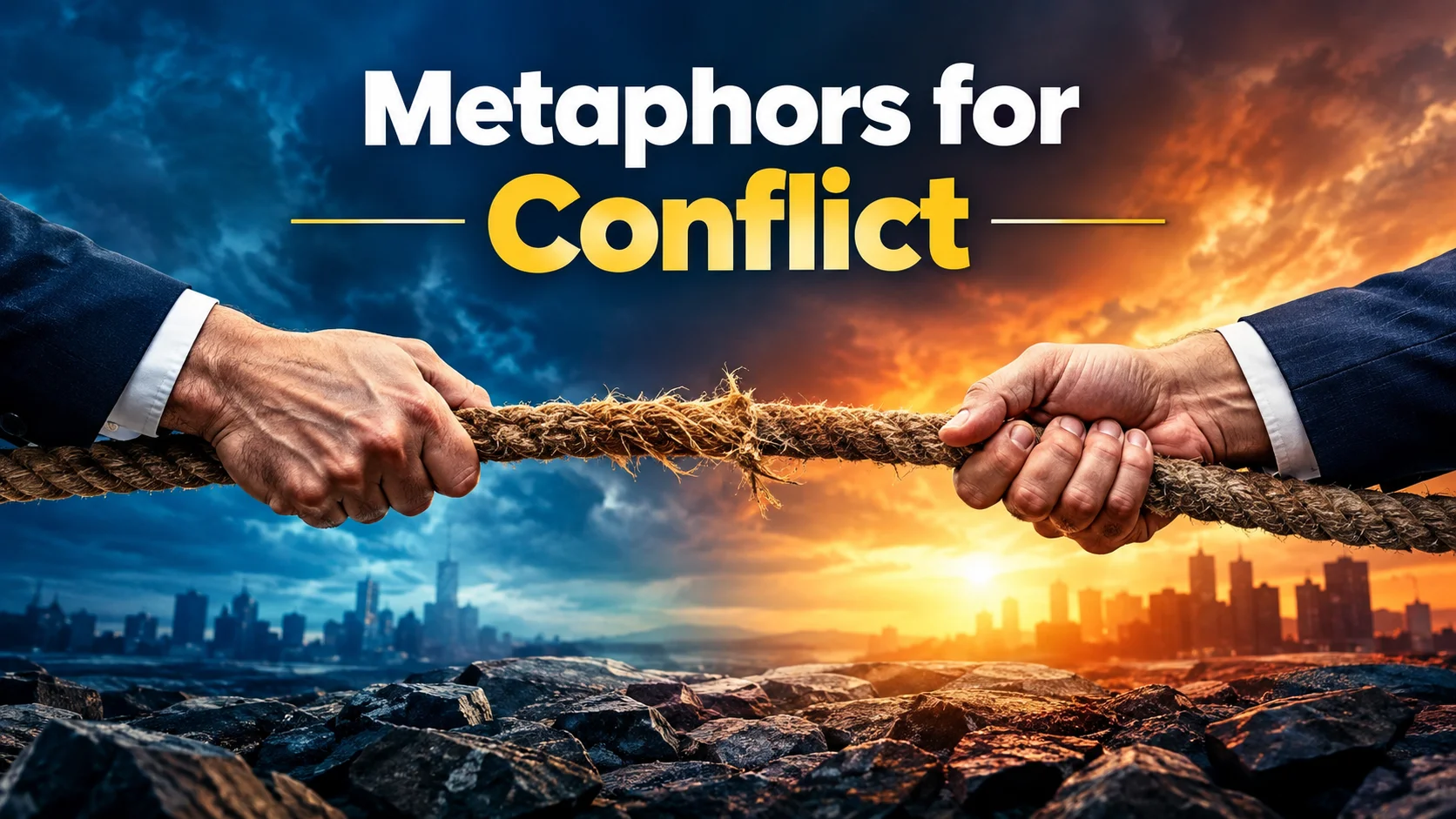
Metaphors for Conflict (With Examples) can give disagreements, struggles, and challenges a familiar shape, making difficult feelings easier to understand. A metaphor turns emotions, tension, and opposition into a vivid, memorable picture for writers, speakers, teachers, and everyday people.
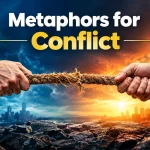
These comparisons make difficult ideas stronger and easier to understand in books, speeches, movies, workplaces, classrooms, and daily conversations. For example, arguing can become a locked tug-of-war, while walking through conflict may feel like entering a battlefield.
A conflict can also be pictured as climbing a mountain with a heavy load during a storm. This image explains why people may feel tired when physical and emotional struggles continue.
A steep mountain can represent difficult experiences, while strong metaphors can give confusing details a clearer shape and make the meaning easier to grasp. A well-chosen metaphor compares one thing with another without using like or as.
1. Conflict Is a Storm
Meaning: This metaphor presents conflict as a powerful emotional disturbance that can suddenly become intense.
Detailed explanation:
A storm represents anger, confusion, tension, and emotional turbulence. Small disagreements may begin as distant thunder before becoming a full emotional downpour. The image works especially well when conflict grows quickly and overwhelms everyone involved.
It also suggests that conflict may eventually pass. After a storm, the atmosphere can become calmer, which creates a natural connection to reconciliation and healing.
Example sentence:
“Their disagreement became a storm that swept through the entire family.”
3 other ways to say it:
- Their argument was an emotional storm.
- Tension gathered like dark clouds.
- Their disagreement thundered through the room.
2. Conflict Is a Battlefield
Meaning: This metaphor describes conflict as a struggle where opposing sides defend their positions.
Detailed explanation:
A battlefield emphasizes competition, resistance, strategy, and opposing forces. People involved may stop listening because they become focused on winning. Every statement can feel like an attack, while every response becomes a defense.
This metaphor works well when conflict has become deeply divided or adversarial.
Example sentence:
“The meeting turned into a battlefield where every suggestion became a challenge.”
3 other ways to say it:
- The discussion became a war of opinions.
- They entered a struggle for control.
- Every conversation felt like a fight for territory.
3. Conflict Is a Wall
Meaning: This metaphor portrays conflict as a barrier that prevents people from understanding each other.
Detailed explanation:
A wall represents distance, silence, resistance, and emotional separation. Two people may stand close physically while remaining worlds apart emotionally. The wall can become higher when resentment grows.
The metaphor also carries a hopeful message because walls can eventually be lowered, crossed, or removed through honest communication.
Example sentence:
“Their unresolved resentment built a wall between them.”
3 other ways to say it:
- Anger became a barrier between their hearts.
- Silence created a divide between them.
- Their disagreement raised an emotional wall.
4. Conflict Is a Fire
Meaning: This metaphor presents conflict as something that can spread and become increasingly destructive.
Detailed explanation:
Fire captures the way anger can grow from a tiny spark into a raging force. A careless comment may ignite emotions that have been quietly building for months.
The metaphor also highlights personal responsibility. Just as fire needs fuel, conflict often needs repeated accusations, resentment, or misunderstanding to keep burning.
Example sentence:
“One careless accusation became a fire that neither person knew how to extinguish.”
3 other ways to say it:
- Their anger started a blaze.
- Resentment became fuel for the dispute.
- A small disagreement ignited a larger struggle.
5. Conflict Is a Tug-of-War
Meaning: This metaphor describes two sides pulling against each other without reaching agreement.
Detailed explanation:
A tug-of-war captures equal resistance and competing desires. Each person wants the situation to move in a different direction. Instead of cooperating, both sides pull harder.
This metaphor works particularly well when neither side appears willing to compromise.
Example sentence:
“Their discussion became a tug-of-war between personal pride and mutual understanding.”
3 other ways to say it:
- They were pulling in opposite directions.
- Their disagreement became a struggle for control.
- Both sides kept pulling against each other.
6. Conflict Is a Pressure Cooker
Meaning: This metaphor describes emotions building internally until they eventually burst.
Detailed explanation:
A pressure cooker represents hidden frustration, suppressed feelings, and rising emotional pressure. People sometimes avoid difficult conversations because they want to maintain peace. Unfortunately, silence doesn’t always remove the problem.
When unresolved feelings accumulate, even a small event can trigger a major confrontation.
Example sentence:
“Months of unspoken frustration turned their relationship into a pressure cooker.”
3 other ways to say it:
- Their emotions were building behind closed doors.
- Resentment was reaching a boiling point.
- Tension was ready to explode.
7. Conflict Is a Thorn
Meaning: This metaphor presents conflict as a painful problem that remains difficult to ignore.
Detailed explanation:
A thorn causes discomfort even though it may seem small. Likewise, a minor disagreement can continue hurting people long after the original event.
This metaphor works especially well for long-lasting resentment.
Example sentence:
“That old disagreement remained a thorn in their friendship.”
3 other ways to say it:
- The memory became a lingering wound.
- Their disagreement remained a painful reminder.
- Resentment became a persistent ache.
8. Conflict Is a Crack in Glass
Meaning: This metaphor shows how conflict can damage trust and relationships.
Detailed explanation:
A crack may begin as a tiny line, yet it can spread across an entire piece of glass. Relationships can work similarly. One argument may seem manageable, but repeated disagreements can weaken trust, communication, and emotional security.
The image also suggests that repair may leave evidence of what happened.
Example sentence:
“Their argument left a crack in the trust they had built over many years.”
3 other ways to say it:
- The disagreement fractured their trust.
- Their relationship developed a visible fault line.
- One argument weakened the foundation of their friendship.
9. Conflict Is a Maze
Meaning: This metaphor portrays conflict as a confusing situation with no obvious way out.
Detailed explanation:
A maze contains dead ends, wrong turns, and complicated paths. Conflict can feel similar when people keep revisiting old accusations without addressing the central issue.
The metaphor emphasizes confusion rather than aggression, making it useful for sensitive writing.
Example sentence:
“Their conversation became a maze of misunderstandings and unfinished thoughts.”
3 other ways to say it:
- They were lost in a cycle of arguments.
- Their disagreement became a tangled path.
- They struggled to find an exit from the dispute.
Read This: 20 Metaphors for Night (With Examples)
10. Conflict Is a Knotted Rope
Meaning: This metaphor describes conflict as a problem made increasingly complicated by repeated tension.
Detailed explanation:
A knot becomes tighter when you pull on it. Conflict often behaves the same way. Defensiveness can tighten the disagreement, while patience and careful communication can gradually loosen it.
This metaphor encourages a problem-solving mindset rather than a winning mindset.
Example sentence:
“Years of misunderstanding had turned their relationship into a knotted rope.”
3 other ways to say it:
- Their problems became tangled together.
- Resentment created a complicated knot.
- They needed patience to untangle the disagreement.
11. Conflict Is a Boiling Pot
Meaning: This metaphor represents emotions becoming increasingly intense until they overflow.
Detailed explanation:
A boiling pot suggests rising frustration and emotional overload. People may appear calm while pressure quietly increases beneath the surface.
The metaphor works especially well when conflict develops gradually rather than appearing suddenly.
Example sentence:
“Their unresolved complaints turned the household into a boiling pot.”
3 other ways to say it:
- Tension was boiling beneath the surface.
- Their frustration was nearing the edge.
- Emotions were about to overflow.
12. Conflict Is a Thorny Path
Meaning: This metaphor describes conflict as a difficult journey filled with emotional obstacles.
Detailed explanation:
A thorny path suggests that resolving disagreement requires patience, courage, and careful movement. Every step may cause discomfort, but continuing forward can eventually lead to resolution.
This metaphor fits stories about relationships that survive difficult periods.
Example sentence:
“Repairing their friendship became a thorny path toward forgiveness.”
3 other ways to say it:
- Reconciliation was a difficult journey.
- They walked through a painful season.
- Healing required careful steps forward.
13. Conflict Is a Broken Bridge
Meaning: This metaphor portrays conflict as damage that interrupts connection between people.
Detailed explanation:
A bridge connects two sides. When it breaks, people can no longer cross easily. In relationships, trust and communication serve as that bridge.
A broken bridge suggests that reconnection requires effort from both sides.
Example sentence:
“Years of resentment left a broken bridge between the two brothers.”
3 other ways to say it:
- Their communication had collapsed.
- Resentment destroyed the path between them.
- They needed to rebuild their connection.
14. Conflict Is a Shadow
Meaning: This metaphor presents conflict as something that follows people even when they don’t openly discuss it.
Detailed explanation:
A shadow stays nearby without demanding attention. Similarly, unresolved conflict can quietly follow a relationship. People may laugh, work, or socialize together while an old disagreement remains underneath everything.
This metaphor is useful for subtle emotional tension.
Example sentence:
“Their old argument remained a shadow over every family gathering.”
3 other ways to say it:
- The disagreement hung over them.
- Resentment followed them wherever they went.
- Their past conflict remained in the background.
15. Conflict Is a Chain
Meaning: This metaphor describes how one disagreement can connect to another and create a repeating cycle.
Detailed explanation:
A chain consists of connected links. Conflict can develop the same structure. One accusation leads to another, which produces another reaction, creating a sequence that becomes difficult to break.
The metaphor emphasizes patterns rather than isolated incidents.
Example sentence:
“One misunderstanding became a chain of arguments that lasted for months.”
3 other ways to say it:
- Each argument became another link in the cycle.
- Their problems were tightly connected.
- One disagreement triggered another.
16. Conflict Is a Storm Cloud
Meaning: This metaphor represents tension that threatens to disrupt an otherwise peaceful situation.
Detailed explanation:
A storm cloud can appear before the rain begins. Likewise, conflict often has warning signs. Short answers, silence, irritation, and avoidance may signal that something deeper needs attention.
This metaphor works particularly well when describing early-stage tension.
Example sentence:
“A storm cloud of resentment hung over their otherwise peaceful partnership.”
3 other ways to say it:
- Tension was gathering overhead.
- An argument was on the horizon.
- Resentment cast a dark cloud over the relationship.
17. Conflict Is a See-Saw
Meaning: This metaphor describes a disagreement in which power or emotional control repeatedly shifts between people.
Detailed explanation:
A see-saw moves up and down. Conflict can feel similar when one person gains influence, then the other responds and changes the balance.
It’s useful for describing unstable relationships or constantly shifting disagreements.
Example sentence:
“Their relationship became a see-saw of blame, apology, anger, and forgiveness.”
3 other ways to say it:
- Their emotions rose and fell repeatedly.
- The relationship moved back and forth.
- They remained trapped in a cycle of reaction.
18. Conflict Is a Locked Door
Meaning: This metaphor represents emotional resistance that prevents honest communication.
Detailed explanation:
A locked door separates people while also suggesting that access remains possible under the right conditions. In conflict, defensiveness can create that locked door.
Patience, empathy, and sincere conversation may provide the key.
Example sentence:
“His defensiveness became a locked door between him and his sister.”
3 other ways to say it:
- Anger closed the door to communication.
- Fear became a barrier to honesty.
- Trust was the key they needed to reconnect.
19. Conflict Is a Wound
Meaning: This metaphor presents conflict as emotional damage that needs attention and time to heal.
Detailed explanation:
A physical wound requires care rather than neglect. Emotional conflict can work the same way. Ignoring pain may allow resentment to deepen.
The metaphor encourages compassion, accountability, patience, and healing.
Example sentence:
“Their harsh words left a wound that required more than a simple apology.”
3 other ways to say it:
- Their argument left an emotional scar.
- The disagreement caused lasting pain.
- Forgiveness helped the relationship begin to heal.
20. Conflict Is a Fork in the Road
Meaning: This metaphor presents conflict as a moment when people must choose what happens next.
Detailed explanation:
A fork in the road offers different directions. Conflict can create the same choice. People may continue toward resentment, or they may choose communication, compromise, and forgiveness.
This metaphor carries a particularly hopeful message because it emphasizes choice rather than permanent damage.
Example sentence:
“Their disagreement became a fork in the road, forcing them to choose between resentment and reconciliation.”
3 other ways to say it:
- The conflict created a turning point.
- They reached a moment of decision.
- The disagreement opened two possible paths forward.
MCQs:
1. “Their unresolved anger became a ______ between them.”
A. bridge
B. wall
C. garden
D. window
Answer: B. wall
2. “One careless comment ignited a ______ that spread through the entire team.”
A. fire
B. river
C. mirror
D. doorway
Answer: A. fire
3. “Their disagreement felt like a ______ with both sides refusing to move.”
A. locked door
B. tug-of-war
C. shadow
D. wound
Answer: B. tug-of-war
4. “Months of hidden frustration turned the relationship into a ______.”
A. pressure cooker
B. bridge
C. garden
D. map
Answer: A. pressure cooker
5. “Their old argument remained a ______ over every family gathering.”
A. key
B. shadow
C. road
D. window
Answer: B. shadow
6. “Their communication had become a ______ that needed rebuilding.”
A. broken bridge
B. storm cloud
C. boiling pot
D. thorn
Answer: A. broken bridge
7. “The conversation became a ______ of misunderstandings and wrong turns.”
A. battlefield
B. maze
C. fire
D. chain
Answer: B. maze
8. “Their harsh words left an emotional ______ that took years to heal.”
A. wound
B. fork
C. storm cloud
D. see-saw
Answer: A. wound
9. “Their disagreement became a ______ in the road, forcing them to choose what came next.”
A. thorn
B. fork
C. chain
D. wall
Answer: B. fork
10. “Years of resentment created a ______ between the two friends.”
A. broken bridge
B. fire
C. boiling pot
D. storm
Answer: A. broken bridge
11. “Every accusation became another ______ in their endless cycle of arguments.”
A. link
B. window
C. cloud
D. door
Answer: A. link
12. “Their emotions were ______ beneath the surface.”
A. sleeping
B. boiling
C. traveling
D. floating
Answer: B. boiling
13. “The meeting turned into a ______ where everyone defended their position.”
A. battlefield
B. garden
C. bridge
D. shadow
Answer: A. battlefield
14. “His refusal to communicate became a ______ that nobody could open.”
A. storm
B. locked door
C. chain
D. thorny path
Answer: B. locked door
15. “Repairing their friendship became a ______ filled with difficult emotional steps.”
A. thorny path
B. pressure cooker
C. crack in glass
D. battlefield
Answer: A. thorny path
FAQs:
What is a metaphor for conflict?
A metaphor for conflict compares disagreement or struggle to another concept without using “like” or “as.” For example, “Their argument was a storm” compares emotional turmoil to a powerful storm.
What is the best metaphor for a serious conflict?
“Conflict is a battlefield” works well for serious disagreements involving strong opposition. However, “conflict is a storm” may work better when you want to emphasize emotional intensity rather than competition.
What metaphor describes unresolved conflict?
“Conflict is a shadow” works especially well for unresolved conflict because it suggests that the problem continues to affect people even when nobody openly discusses it.
What metaphor represents conflict in a relationship?
Several metaphors work well. A wall represents emotional distance, a broken bridge represents damaged connection, and a wound represents emotional pain that needs healing.
How can metaphors make conflict writing more meaningful?
Metaphors transform abstract emotions into clear mental images. Instead of simply saying people feel distant, you can say “a wall stands between them.” This gives readers a stronger emotional picture and makes the writing more memorable.
Conclusion:
Metaphors for Conflict help us describe difficult moments with clearer and more powerful images.
A disagreement can become a battlefield, a storm, a steep mountain, or a tug-of-war, depending on the feelings and situation involved. These comparisons make emotions, struggles, tension, and challenges easier to understand. They also add depth to stories, essays, speeches, poetry, and creative writing.
When you choose a well-chosen metaphor, you can express complex conflict without relying on plain words. With practice, these metaphors can improve your vocabulary, strengthen your writing, and help readers connect with your ideas. Use them naturally, choose images that fit your meaning, and let your words give conflict a clearer shape.








1 thought on “20 Metaphors for Conflict (With Examples)”