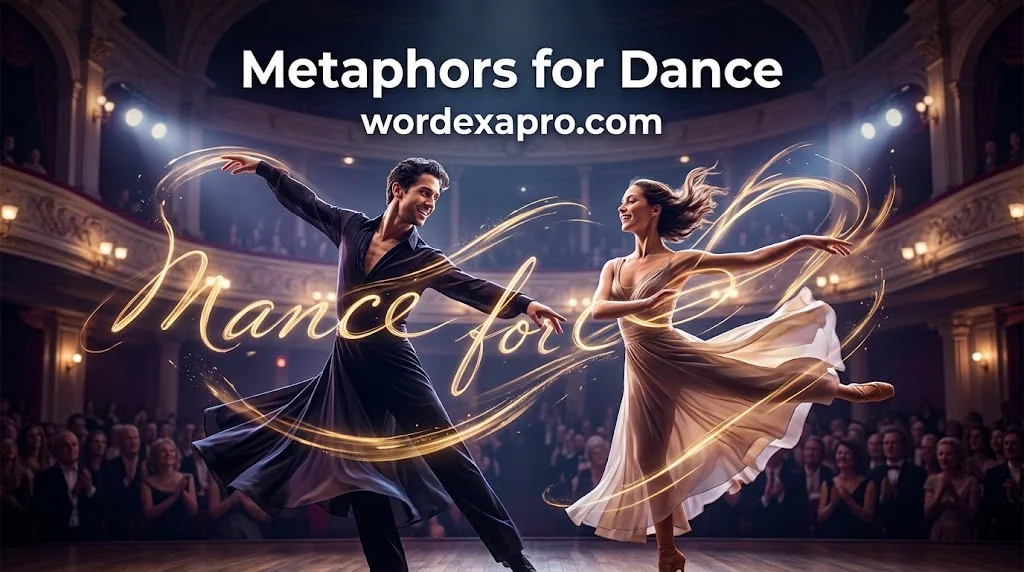
Metaphors for Dance (With Examples) help you describe beauty, emotion, movement, and dancing with expressive comparisons that feel vivid and clear.
When choosing the perfect words, metaphors become powerful language tools for writers, speakers, and business professionals who want greater clarity, warmth, and impact in communication.
They can appear in drafting emails, formal writing, English usage, business communication, and messaging, where their function is to add consistency, creativity, and emotional resonance. In an article, expressive and memorable metaphors can bring dance to life for an audience. A dancer may become a river, flame, heartbeat, or butterfly, creating visual imagery that helps readers picture a performance in their minds.
A powerful metaphor can make a sentence more vivid, adding depth, authenticity, and appreciation. By comparing dance with nature or human feeling, you can communicate freedom, rhythm, connection, confidence, storytelling, joy, passion, grace, and sorrow. These words give dance more personality and help you apply metaphors confidently and effortlessly.
In writing, a strong metaphor works best when it reflects the dancer’s body, music, physical movements, artistic movement, and unique spirit.
1. Dance Is a Flowing River
Meaning:
This metaphor compares dance to a river moving continuously through its natural course.
Detailed explanation:
A river rarely moves in a perfectly straight line. It curves, changes speed, swirls around obstacles, and continues forward. Dance can behave in much the same way. A dancer shifts from one movement to another, creating a sense of continuity and natural motion.
This metaphor works especially well for contemporary dance or performances with smooth transitions.
Example:
Her dance was a flowing river, winding effortlessly from one movement into another.
3 other ways to say it:
- Her movements flowed like a river.
- She danced like water finding its way downstream.
- The performance moved with the rhythm of a gentle current.
2. Dance Is a Story Without Words
Meaning:
This metaphor presents dance as a story communicated through movement instead of speech.
Detailed explanation:
Dancers can portray love, conflict, celebration, loneliness, hope, or transformation without saying anything. Their gestures, expressions, posture, and timing become a kind of visual language.
This metaphor is particularly useful when describing emotionally expressive performances.
Example:
Every turn and gesture became a chapter in her story without words.
3 other ways to say it:
- Her body told a story her voice never needed to speak.
- Every movement carried a sentence of emotion.
- The choreography unfolded like a silent novel.
3. Dance Is a Flame
Meaning:
Here, dance is compared to a living flame, representing energy, passion, and intensity.
Detailed explanation:
Flames flicker, leap, bend, and suddenly grow stronger. Energetic dancing can create the same visual effect. This metaphor is ideal for performances filled with power, excitement, confidence, and passion.
Example:
His performance was a flame, leaping higher with every beat.
3 other ways to say it:
- She moved like a fire dancing in the wind.
- His movements burned with passion.
- The stage seemed to ignite beneath her feet.
4. Dance Is a Conversation
Meaning:
This metaphor compares dance to a conversation between people, bodies, music, or emotions.
Detailed explanation:
When two dancers perform together, their movements often respond to one another. One dancer initiates a movement, while another answers it. Even a solo performance can feel like a conversation between the dancer and the music.
The metaphor emphasizes connection, response, and communication.
Example:
The two dancers carried on a quiet conversation through every movement.
3 other ways to say it:
- Their bodies spoke to one another.
- Every step felt like an answer to the music.
- The choreography became a dialogue between movement and sound.
5. Dance Is a Bird in Flight
Meaning:
This metaphor compares dance to a bird soaring through open air, symbolizing freedom and lightness.
Detailed explanation:
Some dancers seem almost weightless. Their jumps, spins, extensions, and sweeping movements create the impression that gravity has temporarily released them.
This metaphor fits performances that emphasize freedom, elegance, elevation, and fluidity.
Example:
She danced like a bird in flight, rising above the stage with effortless freedom.
3 other ways to say it:
- Her movements soared like wings through the air.
- She seemed to fly rather than dance.
- Every leap looked like a bird escaping into the sky.
6. Dance Is Poetry in Motion
Meaning:
This metaphor describes dance as poetry expressed physically through movement.
Detailed explanation:
Poetry uses carefully chosen words, rhythm, imagery, and emotion. Dance uses carefully chosen gestures, rhythm, space, and physical expression. Both can communicate ideas without explaining everything directly.
Example:
Her ballet was poetry in motion, with every gesture carrying emotional meaning.
3 other ways to say it:
- Her movements formed verses across the stage.
- The choreography felt like a poem brought to life.
- Every step carried the rhythm of poetry.
7. Dance Is a Painting Coming Alive
Meaning:
This metaphor compares dance to a painting that suddenly begins moving.
Detailed explanation:
A dancer creates shapes, lines, angles, and patterns with the body. Lighting, costumes, and stage design can make those shapes even more striking. The result resembles a visual artwork that changes from moment to moment.
Example:
As she moved across the stage, it felt like a painting coming alive.
3 other ways to say it:
- Her body painted pictures through movement.
- The stage became a living canvas.
- Every pose added another brushstroke to the performance.
8. Dance Is a Heartbeat
Meaning:
This metaphor compares dance to the rhythm of a beating heart.
Detailed explanation:
A heartbeat represents life, emotion, and rhythm. Dance also depends heavily on rhythm. When a dancer connects deeply with the music, each step can seem to pulse naturally with the beat.
Example:
His feet followed the music like a heartbeat following the pulse of life.
3 other ways to say it:
- The choreography pulsed like a living heart.
- Every step carried the rhythm of a heartbeat.
- Her movements seemed to breathe with the music.
9. Dance Is a Wave
Meaning:
This metaphor compares dance to a wave rising, falling, breaking, and returning.
Detailed explanation:
Waves constantly change shape. They build gradually before reaching a peak and then release their energy. A dance performance can follow a similar emotional pattern, moving from quiet moments toward dramatic peaks.
Example:
The choreography rolled across the stage like a wave, building toward a powerful finale.
3 other ways to say it:
- Her movements rose and fell like ocean waves.
- The dancers swept across the stage like a tide.
- The performance surged with the rhythm of the sea.
Read This: 20 Metaphors for Culture (With Examples)
10. Dance Is a Journey
Meaning:
This metaphor presents dance as a journey from one emotional or physical point to another.
Detailed explanation:
A journey contains beginnings, changes, challenges, discoveries, and destinations. A dance can create the same sense of progression. The dancer begins somewhere and gradually takes the audience somewhere new.
Example:
The performance became a journey from uncertainty to confidence.
3 other ways to say it:
- Each step carried the audience farther into the story.
- The choreography traveled through changing emotions.
- The dance took us from darkness into celebration.
11. Dance Is a Whisper
Meaning:
This metaphor compares gentle dance to a soft whisper, emphasizing subtlety and tenderness.
Detailed explanation:
Not every performance needs dramatic jumps or forceful movements. Sometimes the smallest gesture carries the deepest emotion. Slow choreography can communicate vulnerability, affection, sadness, or peace.
Example:
Her delicate movements were whispers of tenderness across the stage.
3 other ways to say it:
- She moved with the softness of a whisper.
- Her gestures spoke in quiet emotional tones.
- The choreography unfolded like a secret being softly revealed.
12. Dance Is a Storm
Meaning:
This metaphor compares intense dance to a powerful storm filled with movement and energy.
Detailed explanation:
Storms contain wind, thunder, sudden changes, and enormous force. A highly energetic performance can create a similar atmosphere. The metaphor works particularly well for dramatic, fast-paced, and emotionally intense choreography.
Example:
The dancers swept across the stage like a storm unleashed by the music.
3 other ways to say it:
- Her movements thundered across the stage.
- The performance exploded with the force of a storm.
- Every spin arrived like a sudden gust of wind.
13. Dance Is a Garden in Bloom
Meaning:
This metaphor compares dance to flowers opening and blooming, representing beauty, growth, and transformation.
Detailed explanation:
A flower begins as a closed bud before gradually revealing its form. A dancer can create a similar impression through unfolding arms, rising movements, extensions, and graceful poses.
This metaphor works beautifully when describing ballet, lyrical dance, or graceful contemporary performances.
Example:
Her choreography unfolded like a garden in bloom, revealing new beauty with every movement.
3 other ways to say it:
- Her movements opened like flowers at sunrise.
- The dancers blossomed across the stage.
- Each gesture seemed to reveal another petal of emotion.
14. Dance Is a Musical Pulse
Meaning:
This metaphor describes dance as the physical expression of music’s rhythm.
Detailed explanation:
Music exists as sound, while dance makes that rhythm visible. A dancer can transform beats, pauses, melodies, and changes in tempo into physical movement.
Example:
His body became a musical pulse, matching every beat with remarkable precision.
3 other ways to say it:
- She turned every beat into movement.
- His feet translated rhythm into physical language.
- The choreography made the music visible.
15. Dance Is a Feather on the Wind
Meaning:
This metaphor presents dance as light, delicate, and effortlessly carried by motion.
Detailed explanation:
A feather moves gently with even the smallest breeze. When dancers perform with exceptional softness, their movements can appear equally effortless.
Example:
She crossed the stage like a feather carried gently on the wind.
3 other ways to say it:
- Her movements floated through the air.
- She seemed almost weightless.
- Every step drifted softly across the stage.
16. Dance Is a Mirror of Emotion
Meaning:
This metaphor describes dance as a mirror that reflects feelings.
Detailed explanation:
A dancer’s posture, facial expression, speed, and gestures can reveal emotions that words might struggle to explain. Joy may appear through expansive movements, while grief may appear through restrained or collapsing gestures.
Example:
Her dance became a mirror of emotion, reflecting every shade of longing and hope.
3 other ways to say it:
- Her body reflected what her heart was feeling.
- Every movement revealed another emotion.
- The choreography gave her feelings a physical form.
17. Dance Is a Spark
Meaning:
This metaphor compares dance to a spark that suddenly creates excitement and energy.
Detailed explanation:
A small spark can start something much larger. Likewise, one movement can change the entire mood of a performance. A dancer’s first step may capture attention and gradually build excitement.
Example:
Her first movement was a spark that ignited the entire performance.
3 other ways to say it:
- One step set the stage alive with energy.
- His movement sparked excitement throughout the room.
- The performance began with a tiny spark and grew into a blaze.
18. Dance Is a Puzzle in Motion
Meaning:
This metaphor compares choreography to a puzzle whose pieces continuously come together.
Detailed explanation:
A complex dance often contains many individual movements. When those movements align, they create a complete artistic picture. Group performances especially resemble moving puzzles because each dancer has a specific role.
Example:
The dancers fit together like pieces of a puzzle in motion.
3 other ways to say it:
- Every step completed another piece of the choreography.
- Their movements connected like perfectly matched pieces.
- The group formed one picture from countless moving parts.
19. Dance Is a Language of the Body
Meaning:
This metaphor describes dance as a language communicated physically instead of verbally.
Detailed explanation:
Languages allow people to express thoughts and emotions. Dance does something similar through gestures, posture, rhythm, facial expressions, and physical relationships. It can communicate across cultural and linguistic boundaries.
Example:
Dance became a language of the body, saying what words could not express.
3 other ways to say it:
- Her body spoke through every gesture.
- Movement became her vocabulary.
- She communicated through rhythm instead of words.
20. Dance Is a Celebration of Life
Meaning:
This metaphor presents dance as an expression of vitality, freedom, connection, and human experience.
Detailed explanation:
People have danced throughout history to celebrate important moments, connect with communities, express emotions, and preserve traditions. Dance can therefore represent more than entertainment. It can symbolize the simple joy of being alive and moving through the world.
Example:
Their joyful performance felt like a celebration of life itself.
3 other ways to say it:
- Every step celebrated the joy of being alive.
- The dancers turned movement into an expression of life.
- Their performance honored freedom, connection, and happiness.
MCQs:
Which metaphor best describes a dancer whose movements are smooth and continuous?
A. Dance is a storm
B. Dance is a flowing river
C. Dance is a puzzle
D. Dance is a spark
Answer: B. Dance is a flowing river
Which metaphor best describes dance as a form of silent storytelling?
A. Dance is a story without words
B. Dance is a feather
C. Dance is a storm
D. Dance is a garden
Answer: A. Dance is a story without words
Which metaphor best represents passion and intense energy?
A. Dance is a whisper
B. Dance is a feather
C. Dance is a flame
D. Dance is a mirror
Answer: C. Dance is a flame
Which metaphor best describes communication between two dancers?
A. Dance is a conversation
B. Dance is a river
C. Dance is a garden
D. Dance is a spark
Answer: A. Dance is a conversation
Which metaphor emphasizes freedom and graceful movement through the air?
A. Dance is a puzzle
B. Dance is a bird in flight
C. Dance is a heartbeat
D. Dance is a storm
Answer: B. Dance is a bird in flight
What does “dance is poetry in motion” emphasize?
A. Physical strength only
B. Artistic expression and rhythm
C. Competition between dancers
D. The size of the stage
Answer: B. Artistic expression and rhythm
Which metaphor describes dance as visual artwork?
A. Dance is a painting coming alive
B. Dance is a heartbeat
C. Dance is a whisper
D. Dance is a conversation
Answer: A. Dance is a painting coming alive
Which metaphor is most closely associated with rhythm and life?
A. Dance is a heartbeat
B. Dance is a garden
C. Dance is a feather
D. Dance is a puzzle
Answer: A. Dance is a heartbeat
Which metaphor best describes choreography that rises and falls dramatically?
A. Dance is a wave
B. Dance is a whisper
C. Dance is a mirror
D. Dance is a language
Answer: A. Dance is a wave
Which metaphor suggests a performance that moves through different emotional stages?
A. Dance is a journey
B. Dance is a feather
C. Dance is a spark
D. Dance is a painting
Answer: A. Dance is a journey
Which metaphor best suits extremely gentle and delicate movements?
A. Dance is a storm
B. Dance is a whisper
C. Dance is a flame
D. Dance is a puzzle
Answer: B. Dance is a whisper
Which metaphor suggests powerful and dramatic movement?
A. Dance is a storm
B. Dance is a feather
C. Dance is a garden
D. Dance is a mirror
Answer: A. Dance is a storm
Which metaphor represents dance as physical communication?
A. Dance is a language of the body
B. Dance is a wave
C. Dance is a spark
D. Dance is a garden
Answer: A. Dance is a language of the body
Which metaphor best describes a coordinated group performance?
A. Dance is a puzzle in motion
B. Dance is a whisper
C. Dance is a flame
D. Dance is a feather
Answer: A. Dance is a puzzle in motion
Which metaphor presents dance as an expression of joy, vitality, and human experience?
A. Dance is a storm
B. Dance is a celebration of life
C. Dance is a whisper
D. Dance is a puzzle
Answer: B. Dance is a celebration of life
FAQs:
What is a metaphor for dance?
A metaphor for dance directly compares dance to another idea or object to highlight a particular quality. For example, “Dance is poetry in motion” compares dance with poetry to emphasize artistic expression.
What is a beautiful metaphor for dance?
“Dance is a flowing river” is a graceful metaphor because it captures continuous movement, fluidity, and natural rhythm.
How can I describe dance without saying it is beautiful?
You can describe specific qualities instead. Try phrases such as “her movements flowed like water,” “his feet followed the heartbeat of the music,” or “the choreography unfolded like a story without words.”
What metaphor describes dance as communication?
“Dance is a language of the body” works especially well. It shows how dancers communicate emotions and ideas through gestures, posture, rhythm, and movement.
Why are metaphors useful when describing dance?
Metaphors make descriptions more vivid, emotional, and memorable. They help readers visualize movement while also understanding the mood behind it. Instead of simply describing what a dancer does, you can show what the movement feels like.
Conclusion:
Metaphors for Dance (With Examples) make it easier to describe movement, emotion, and beauty in a memorable way.
A dancer can become a flowing river, a flame in motion, a butterfly, or a whispered story, depending on the feeling you want to express. These comparisons add depth, creativity, and emotional resonance to your writing while helping readers picture the performance clearly.
Whether you are describing ballet, hip-hop, contemporary dance, or ballroom dancing, the right metaphor can capture the dancer’s energy, grace, rhythm, and unique spirit. With thoughtful word choices, your descriptions can feel more natural, vivid, and expressive. Ultimately, metaphors turn ordinary descriptions into engaging images that allow readers to experience dance through words.









1 thought on “20 Metaphors for Dance (With Examples)”