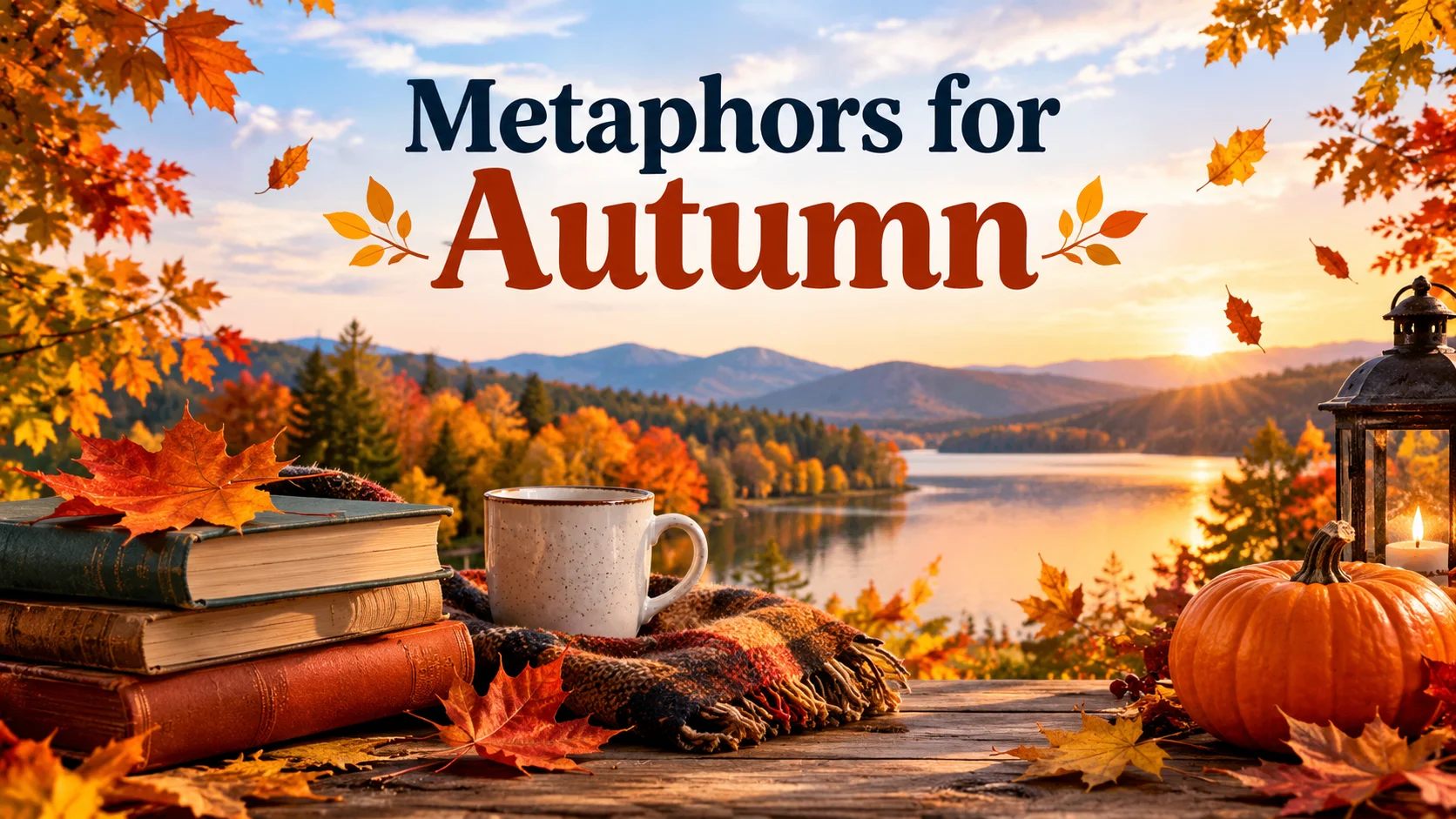
Metaphors for Autumn (With Examples) help writers express autumn’s beauty, change, warmth, memory, and quiet endings through vivid, relatable imagery.
Autumn and fall are a season when nature becomes a beautiful mix of red, yellow, and orange. As summer begins to fade, bright leaves leave the trees and create a colorful picture across the ground.
The cooler weather, fresh air, quiet warmth, bonfires, and apple cider can bring nostalgia and memory. A skilled writer can turn this ordinary language into something vivid, emotional, and memorable by comparing autumn with familiar images.
For example, a fiery sunset can become an image in the reader’s mind, while the wind becomes soft whispers. This comparison gives the meaning a deeper, more relatable feeling and helps you express the autumn mood.
Autumn also gives writers a natural way to describe endings, new beginnings, transition, and impermanence. A simple sentence can become a powerful expression when strong imagery carries the emotion behind it.
These creative ideas work well in a poem, social media post, speech, poetry, stories, essays, captions, and everyday messages.
Lets Dive In:
1. Autumn Is a Golden Blanket
Meaning: This metaphor compares autumn to a soft golden blanket covering the landscape.
Explanation: As leaves turn yellow, amber, and orange, they spread across trees, sidewalks, parks, and gardens. The scene can resemble a warm blanket wrapped around the earth. This metaphor highlights comfort, warmth, beauty, and seasonal change.
Example:
“Autumn spread a golden blanket across the quiet countryside.”
Three other ways to say it:
- Autumn wrapped the earth in gold.
- The landscape wore a blanket of amber leaves.
- Golden leaves covered the world like a warm quilt.
2. Autumn Is Nature’s Farewell
Meaning: This metaphor presents autumn as nature saying goodbye to summer.
Explanation: Autumn arrives between the brightness of summer and the stillness of winter. Trees lose their leaves, daylight becomes shorter, and temperatures fall. The season can therefore feel like a gentle farewell before another chapter begins.
Example:
“Autumn was nature’s farewell to summer, painted across every hillside.”
Three other ways to say it:
- Autumn is summer’s final goodbye.
- The season whispers farewell to warm days.
- Autumn closes summer’s chapter.
3. Autumn Is a Painter
Meaning: Autumn becomes a painter creating colorful scenes across nature.
Explanation: Red, orange, yellow, copper, and brown leaves transform familiar landscapes. Calling autumn a painter gives the season a sense of creativity and movement. It suggests that nature itself creates the artwork.
Example:
“Autumn became a brilliant painter, covering the trees with crimson and gold.”
Three other ways to say it:
- Autumn paints the forests in fiery colors.
- The season brushes color across the countryside.
- Nature becomes an artist during autumn.
4. Autumn Is a Turning Page
Meaning: This metaphor compares autumn to a page turning in a book.
Explanation: A turning page represents change, progress, and a new chapter. Autumn marks a transition between summer and winter, making this comparison especially useful when discussing personal growth or changing circumstances.
Example:
“Autumn felt like a turning page, carrying us toward a quieter chapter.”
Three other ways to say it:
- Autumn turns the page on summer.
- The season opens a new chapter.
- Autumn is a chapter between warmth and winter.
5. Autumn Is a Fire in the Forest
Meaning: This metaphor compares colorful autumn foliage to a glowing fire.
Explanation: Bright red, orange, and yellow leaves can resemble flames spreading through the branches. Unlike an actual fire, however, this seasonal blaze is quiet, natural, and temporary.
Example:
“The hillside looked like a fire in the forest, glowing beneath the afternoon sun.”
Three other ways to say it:
- The trees burned with autumn color.
- The forest glowed like a field of flames.
- Red and orange leaves set the woods ablaze.
6. Autumn Is a Slow Exhale
Meaning: Autumn is compared to a slow breath released after a long effort.
Explanation: Summer often feels energetic, bright, and active. Autumn introduces a slower rhythm. Days become quieter, evenings arrive earlier, and nature gradually prepares for winter. This metaphor captures release, calm, and slowing down.
Example:
“Autumn was the earth’s slow exhale after the restless energy of summer.”
Three other ways to say it:
- The season breathes out softly.
- Autumn is nature taking a long breath.
- The earth settles into a peaceful sigh.
7. Autumn Is a Rust-Colored Crown
Meaning: This metaphor describes trees covered in autumn foliage as wearing a royal crown.
Explanation: Trees can look majestic when their branches become filled with red, copper, orange, and golden leaves. The crown image adds a sense of dignity, richness, and seasonal splendor.
Example:
“The old maple wore a rust-colored crown beneath the cloudy sky.”
Three other ways to say it:
- The trees wear crowns of copper leaves.
- Autumn places a royal crown on every branch.
- The forest rises beneath crowns of crimson and gold.
8. Autumn Is a Bridge
Meaning: Autumn acts as a bridge between summer and winter.
Explanation: A bridge connects two separate places. Similarly, autumn connects two different seasons. It carries nature from summer’s warmth toward winter’s cold, making it a powerful metaphor for transitions in life.
Example:
“Autumn was a bridge between summer’s brightness and winter’s silence.”
Three other ways to say it:
- Autumn connects summer and winter.
- The season carries nature from warmth into stillness.
- Autumn stands between two worlds.
9. Autumn Is Nature’s Clock
Meaning: Autumn represents a natural clock signaling that time is moving forward.
Explanation: Falling leaves, shorter days, cooler mornings, and earlier sunsets remind us that another part of the year has arrived. This metaphor works especially well when discussing time, aging, change, and memory.
Example:
“Every falling leaf was nature’s clock, reminding us that another year was passing.”
Three other ways to say it:
- Autumn marks the passage of time.
- The falling leaves count down the year.
- The season is nature’s reminder that time moves on.
10. Autumn Is a Storyteller
Meaning: Autumn is portrayed as a storyteller revealing stories through its colors and changes.
Explanation: Old trees, fallen leaves, misty mornings, and fading sunlight can evoke memories and emotions. Autumn often encourages reflection, making it feel like a storyteller sharing tales about time, change, and life.
Example:
“Autumn became a quiet storyteller, speaking through every falling leaf.”
Three other ways to say it:
- The leaves tell stories of passing days.
- Autumn whispers tales through the trees.
- The season tells its story in shades of red and gold.
11. Autumn Is a Rustling Symphony
Meaning: This metaphor compares autumn sounds to a symphony performed by nature.
Explanation: Dry leaves crunch beneath your feet, branches move in the wind, and rain taps against windows. These sounds combine into a seasonal rhythm. The metaphor emphasizes sound, atmosphere, and natural harmony.
Example:
“The path became a rustling symphony beneath our footsteps.”
Three other ways to say it:
- The leaves create nature’s autumn orchestra.
- The forest plays a symphony of rustling leaves.
- Every footstep joins autumn’s quiet music.
Read This: 20 Metaphors for Basketball (With Examples)
12. Autumn Is a Treasure Chest
Meaning: Autumn becomes a treasure chest filled with natural colors and moments.
Explanation: Autumn offers many visual treasures: colorful foliage, pumpkins, crisp mornings, warm drinks, harvests, and golden sunlight. This metaphor focuses on the season’s abundance and visual richness.
Example:
“The countryside opened like a treasure chest, revealing copper leaves and golden fields.”
Three other ways to say it:
- Autumn is nature’s chest of colorful treasures.
- The season spills its treasures across the landscape.
- Every autumn morning reveals another natural treasure.
13. Autumn Is a Gentle Goodbye
Meaning: Autumn represents a soft and peaceful farewell.
Explanation: Leaves fall gradually rather than disappearing all at once. The season therefore creates an image of letting go without bitterness. This metaphor can express acceptance, nostalgia, and emotional release.
Example:
“Each falling leaf felt like a gentle goodbye to summer.”
Three other ways to say it:
- Autumn whispers farewell.
- The leaves offer summer a quiet goodbye.
- The season lets go with tenderness.
14. Autumn Is a Harvest Basket
Meaning: Autumn is compared to a basket filled with the results of a year’s growth.
Explanation: Harvest season represents the rewards of earlier effort. The metaphor can describe both literal crops and the emotional idea of gathering memories, lessons, experiences, and achievements.
Example:
“Autumn arrived with a harvest basket full of memories.”
Three other ways to say it:
- The season gathers the fruits of the year.
- Autumn carries a basket of memories.
- The earth presents its harvest like a gift.
15. Autumn Is a Quiet Library
Meaning: Autumn becomes a peaceful library filled with memories and reflection.
Explanation: Cooler weather and quieter surroundings can encourage people to slow down and think. A library represents silence, knowledge, memories, and contemplation, making it a fitting image for autumn’s reflective mood.
Example:
“Autumn felt like a quiet library, inviting me to revisit old memories.”
Three other ways to say it:
- The season is a room filled with memories.
- Autumn invites quiet reflection.
- The falling leaves seem to hold forgotten stories.
16. Autumn Is a Fading Photograph
Meaning: This metaphor compares autumn to a photograph slowly losing its brightness.
Explanation: Autumn’s colors are vivid, yet they don’t last forever. Leaves eventually fall, and winter takes their place. The fading photograph captures the season’s temporary beauty and nostalgic character.
Example:
“Autumn was a fading photograph, beautiful because it could not last forever.”
Three other ways to say it:
- The season is a picture slowly fading.
- Autumn preserves summer like an old photograph.
- The colors linger like memories in a photograph.
17. Autumn Is a Golden Hour
Meaning: Autumn is compared to golden hour, the warm period when sunlight creates a soft glow.
Explanation: Autumn sunlight often appears especially rich against red and yellow foliage. The metaphor also suggests that autumn is a precious period to appreciate before winter arrives.
Example:
“Autumn felt like a golden hour for the entire countryside.”
Three other ways to say it:
- The season bathes the world in golden light.
- Autumn turns ordinary afternoons into glowing moments.
- The countryside seems to live inside a golden hour.
18. Autumn Is a Doorway
Meaning: Autumn represents a doorway leading from one stage of the year into another.
Explanation: A doorway symbolizes transition and possibility. Autumn stands at the entrance to winter while still carrying traces of summer. This makes it useful when writing about personal changes or new beginnings.
Example:
“Autumn was a doorway into a quieter season of life.”
Three other ways to say it:
- The season opens the door to winter.
- Autumn stands at the threshold of change.
- The leaves lead us toward another chapter.
19. Autumn Is a Warm Cup of Tea
Meaning: This metaphor compares autumn with the comfort of holding a warm cup of tea on a cool day.
Explanation: Autumn often inspires cozy feelings. Sweaters, blankets, fireplaces, warm drinks, and rainy afternoons create an atmosphere of comfort and intimacy. This metaphor works especially well in personal writing.
Example:
“Autumn wrapped around the house like a warm cup of tea on a chilly afternoon.”
Three other ways to say it:
- Autumn feels like warmth on a cold morning.
- The season brings comfort like a steaming drink.
- Cool autumn days invite the warmth of home.
20. Autumn Is a Poet’s Notebook
Meaning: Autumn is portrayed as a notebook filled with images, emotions, and inspiration.
Explanation: The season provides endless material for creative expression. Falling leaves, fog, rain, harvests, changing light, and quiet evenings can inspire poetry and storytelling. This metaphor emphasizes creativity, emotion, and observation.
Example:
“Autumn was a poet’s notebook, filling every page with color and memory.”
Three other ways to say it:
- The season writes poetry across the landscape.
- Every autumn leaf becomes a line of verse.
- Nature fills its pages with seasonal poetry.
MCQs:
1. What is a metaphor for autumn?
A. Autumn is a golden blanket.
B. Autumn is a loud machine.
C. Autumn is a dark room.
D. Autumn is a stone wall.
Answer: A. Autumn is a golden blanket.
2. What does “Autumn is nature’s farewell” mean?
A. Autumn welcomes summer.
B. Autumn marks summer’s goodbye.
C. Autumn creates more sunlight.
D. Autumn stops the seasons.
Answer: B. Autumn marks summer’s goodbye.
3. Which metaphor compares autumn to an artist?
A. Autumn is a bridge.
B. Autumn is a clock.
C. Autumn is a painter.
D. Autumn is a doorway.
Answer: C. Autumn is a painter.
4. What does “Autumn is a turning page” suggest?
A. Change and transition
B. Loud weather
C. Summer becoming longer
D. A physical book
Answer: A. Change and transition.
5. Which metaphor compares autumn colors to flames?
A. Autumn is a quiet library.
B. Autumn is a fire in the forest.
C. Autumn is a warm cup of tea.
D. Autumn is a treasure chest.
Answer: B. Autumn is a fire in the forest.
6. What feeling does “Autumn is a slow exhale” create?
A. Panic
B. Anger
C. Calmness
D. Confusion
Answer: C. Calmness.
7. Which metaphor represents the passage of time?
A. Autumn is nature’s clock.
B. Autumn is a painter.
C. Autumn is a crown.
D. Autumn is a doorway.
Answer: A. Autumn is nature’s clock.
8. What does “Autumn is a rustling symphony” focus on?
A. Taste
B. Sound
C. Smell
D. Temperature
Answer: B. Sound.
9. Which metaphor presents autumn as something full of natural treasures?
A. Autumn is a bridge.
B. Autumn is a treasure chest.
C. Autumn is a fading photograph.
D. Autumn is a clock.
Answer: B. Autumn is a treasure chest.
10. What does “Autumn is a gentle goodbye” represent?
A. Celebration
B. Farewell
C. Competition
D. Confusion
Answer: B. Farewell.
11. Which metaphor is connected with reflection and memories?
A. Autumn is a quiet library.
B. Autumn is a fire.
C. Autumn is a crown.
D. Autumn is a bridge.
Answer: A. Autumn is a quiet library.
12. What does “Autumn is a fading photograph” suggest?
A. Beauty lasts forever.
B. Seasonal beauty is temporary.
C. Autumn has no colors.
D. Winter never arrives.
Answer: B. Seasonal beauty is temporary.
13. Which metaphor describes autumn as a connection between two seasons?
A. Autumn is a bridge.
B. Autumn is a painter.
C. Autumn is a notebook.
D. Autumn is a blanket.
Answer: A. Autumn is a bridge.
14. What feeling does “Autumn is a warm cup of tea” communicate?
A. Fear
B. Comfort
C. Anger
D. Excitement
Answer: B. Comfort.
15. Which metaphor presents autumn as a source of creativity?
A. Autumn is a poet’s notebook.
B. Autumn is nature’s clock.
C. Autumn is a doorway.
D. Autumn is a bridge.
Answer: A. Autumn is a poet’s notebook.
FAQs:
What is a metaphor for autumn?
A metaphor for autumn directly compares the season with something else to express an idea or emotion. For example, “Autumn is a golden blanket” compares colorful leaves covering the landscape with a warm blanket.
What are some beautiful metaphors for autumn?
Some expressive choices include “autumn is a painter,” “autumn is a golden blanket,” “autumn is a turning page,” “autumn is a fading photograph,” and “autumn is a quiet library.”
What metaphor describes autumn as a season of change?
“Autumn is a turning page” works especially well. It presents the season as a transition from one chapter of the year to another.
What metaphor can describe falling autumn leaves?
You can describe falling leaves as “nature’s farewell,” “golden confetti,” “a fading photograph,” or “pages falling from nature’s book.” Each phrase creates a different mood.
How can I use autumn metaphors in writing?
Choose a metaphor based on your intended mood and message. Use comforting imagery for personal writing, transitional imagery for essays, and vivid imagery for poetry or creative stories. Then connect the metaphor naturally to the surrounding sentence.
Conclusion:
Autumn is more than a season of falling leaves and cooler days. It is a beautiful reminder of change, growth, reflection, and new beginnings. The colors of red, yellow, and orange create vivid images that can make ordinary writing feel more alive.
Using metaphors for autumn allows you to express feelings that simple words may not fully capture. A falling leaf can represent letting go, while a quiet autumn evening can suggest peace, memory, or thoughtful reflection.
These comparisons work especially well in poems, stories, essays, speeches, captions, and everyday messages.
The best metaphor feels natural and connects the season with an emotion or familiar experience. Whether you want to describe beauty, change, nostalgia, or impermanence, autumn gives you plenty of creative inspiration. With the right metaphor, you can help readers see the season differently and make your writing more vivid, personal, memorable, and meaningful.













1 thought on “20 Metaphors for Autumn (With Examples)”