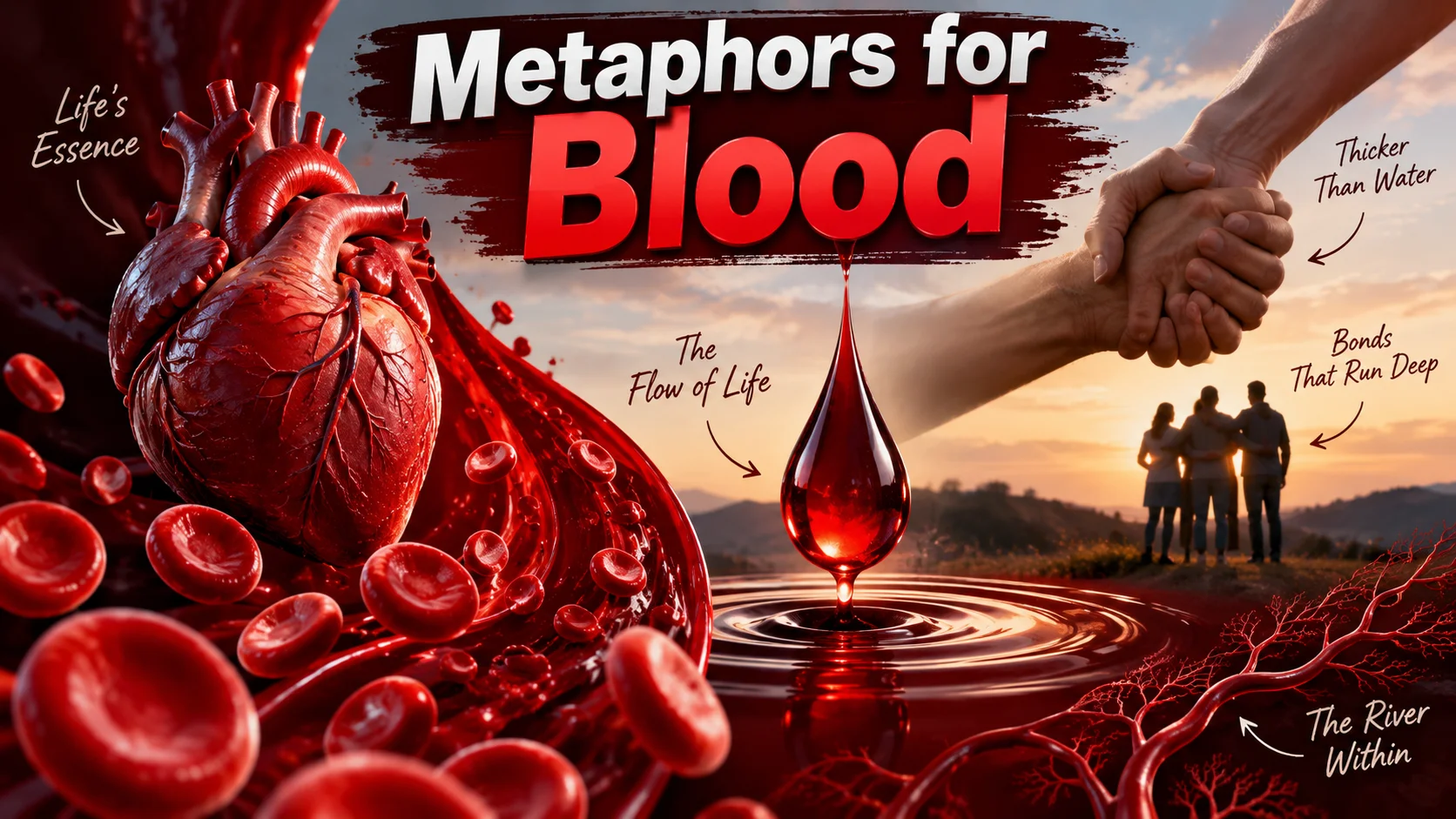
Metaphors for Blood (With Examples) make blood imagery vivid, helping writers express emotion, connection, and meaning in simple language today. In everyday language, metaphors turn ideas and emotions into clear images that people can vividly understand.
Writers compare different things through shared similarities, making difficult descriptions easier to convey. In the human body, blood resembles a river flowing through the veins, carrying nutrients and oxygen to every part. This dynamic, essential role keeps us healthy and alive, showing the significance of our bodies.
In this article, we explore various metaphors that make blood powerful through symbols that represent life, family, courage, sacrifice, passion, strength, and emotion. Writers express these ideas through vivid, memorable images, comparing objects and concepts to discover deeper meanings.
Blood becomes a symbol across literature, poetry, storytelling, and everyday language, where it can suggest family, sacrifice, violence, courage, passion, memory, and an invisible bond between people.
In a dramatic novel, emotional poem, haunting horror scene, or reflective essay, creative blood metaphors strengthen imagery and emotional impact. Through metaphor and symbolism, writers can transform a simple painting into deeper understanding, deepen meaning, and strengthen the reader’s response.
Lets Dive In:
1. Blood Is the River of Life
Meaning:
This metaphor compares blood to a river that carries life throughout the body.
Detailed explanation:
A river constantly moves, carrying water from one place to another. Blood performs a similar role inside the human body. It transports oxygen and nutrients while supporting the organs that keep you alive. Because of this connection, calling blood the “river of life” creates an image of movement, energy, and vitality.
This metaphor works especially well when you want to describe life as something continuously flowing. It can also suggest that stopping the flow of blood threatens the entire system.
Example sentence:
“Inside her, the river of life moved quietly through every vein.”
3 other ways to say it:
- Blood is the stream that sustains life.
- Blood is life flowing through the body.
- Blood is the moving current of existence.
2. Blood Is a Family Thread
Meaning:
This metaphor presents blood as a thread connecting members of the same family.
Detailed explanation:
A thread can connect pieces of fabric into one larger pattern. Similarly, blood can symbolize family heritage, ancestry, and shared identity. The expression focuses less on physical blood and more on the invisible connection between relatives.
This metaphor is useful when discussing family bonds, ancestry, generations, and belonging. It can sound especially meaningful in personal stories about parents, children, grandparents, and heritage.
Example sentence:
“Though they lived oceans apart, the family thread still connected them.”
3 other ways to say it:
- Blood is the thread of our ancestry.
- Blood is the bond woven through generations.
- Blood is the invisible thread between relatives.
3. Blood Is a Crimson Ocean
Meaning:
This metaphor compares blood to a vast red ocean.
Detailed explanation:
An ocean suggests enormous scale, depth, movement, and mystery. When blood becomes a crimson ocean in figurative language, the phrase can intensify a scene dramatically. It often suits fictional writing, poetry, or descriptions involving danger, battle, injury, or overwhelming emotion.
The metaphor doesn’t mean blood literally fills an ocean. Instead, it magnifies its color, quantity, and emotional impact.
Example sentence:
“The battlefield seemed to disappear beneath a crimson ocean.”
3 other ways to say it:
- Blood became a red sea.
- The ground looked like a scarlet tide.
- A crimson flood covered the scene.
4. Blood Is the Body’s Red Messenger
Meaning:
This metaphor describes blood as a messenger carrying essential materials throughout the body.
Detailed explanation:
Blood travels continuously through the circulatory system. It carries oxygen, nutrients, hormones, and other substances where they’re needed. Calling it a red messenger gives this biological process a human quality.
The metaphor works particularly well in educational writing and creative explanations because it turns a complicated biological function into something easy to picture.
Example sentence:
“Blood acts as the body’s red messenger, delivering what every organ needs.”
3 other ways to say it:
- Blood is the body’s traveling courier.
- Blood is a crimson delivery system.
- Blood carries life’s messages through every vein.
5. Blood Is a Scarlet Ribbon
Meaning:
This metaphor compares blood to a scarlet ribbon winding through the body.
Detailed explanation:
A ribbon is long, flexible, and continuous. Veins and arteries create pathways throughout the body, making the image of a ribbon particularly effective. The word scarlet adds a vivid visual quality.
This metaphor can create a softer and more artistic tone than darker descriptions of blood. It’s useful for poetry, romantic writing, and visual descriptions.
Example sentence:
“A scarlet ribbon seemed to weave quietly beneath his skin.”
3 other ways to say it:
- Blood is a red ribbon beneath the skin.
- Blood is a crimson strand winding through the body.
- Blood is a scarlet thread running within us.
6. Blood Is the Flame Within
Meaning:
This metaphor presents blood as an inner flame representing life, energy, and passion.
Detailed explanation:
A flame produces heat and light. In figurative language, it often represents energy, courage, desire, or vitality. Describing blood as an inner flame suggests that something powerful is burning inside a person.
This metaphor works well when writing about determination, passion, courage, or emotional intensity.
Example sentence:
“Her blood was an inner flame, refusing to surrender to fear.”
3 other ways to say it:
- Blood is the fire of life.
- Blood is a hidden spark within us.
- Blood is the flame that keeps passion alive.
7. Blood Is the Ink of Heritage
Meaning:
This metaphor compares blood to ink that records family history and ancestry.
Detailed explanation:
Ink leaves permanent marks on paper. Blood can symbolically carry traits, traditions, stories, and identities from one generation to another. Calling it the ink of heritage emphasizes the idea that your ancestry forms part of your personal story.
It’s especially effective when discussing family history, cultural traditions, ancestry, and inherited identity.
Example sentence:
“Their traditions lived on like ink written into the blood of every generation.”
3 other ways to say it:
- Blood records the story of our ancestors.
- Blood carries the writing of generations.
- Blood is the signature of heritage.
8. Blood Is a Red Clock
Meaning:
This metaphor describes blood as a clock that reflects the continuous rhythm of life.
Detailed explanation:
A clock measures time through repeated movement. The heartbeat similarly creates a rhythm that continues throughout life. Calling blood a red clock combines the color of blood with the idea of an ongoing biological rhythm.
The metaphor can represent life, time, mortality, and the passing of moments.
Example sentence:
“Her heartbeat sounded like a red clock, counting each precious second.”
3 other ways to say it:
- Blood is the clockwork of life.
- Blood is a crimson timer beating within us.
- Blood keeps time beneath the skin.
9. Blood Is a Living Road
Meaning:
This metaphor compares blood vessels to roads carrying life throughout the body.
Detailed explanation:
Roads connect different places and allow people or goods to travel. Blood vessels create pathways through which blood travels to organs and tissues. Calling blood a living road emphasizes movement, connection, and transportation.
It can make biological writing more accessible because readers can picture roads, routes, destinations, and traffic.
Example sentence:
“Every vein became a living road, carrying nourishment toward distant cells.”
3 other ways to say it:
- Blood is the highway of the body.
- Blood travels along life’s inner roads.
- The bloodstream is a living network of routes.
10. Blood Is a Crimson Current
Meaning:
This metaphor compares flowing blood to a strong current of water.
Detailed explanation:
A current moves steadily in one direction. Blood also circulates continuously through the body. The word crimson creates a vivid visual image while current suggests motion and energy.
This metaphor works particularly well in poetry, fiction, and dramatic descriptions.
Example sentence:
“A crimson current rushed beneath the surface of his skin.”
3 other ways to say it:
- Blood is a scarlet stream.
- Blood moves like a red current.
- Blood is a flowing crimson tide.
Lets Dive In: 20 Metaphors for Communication (With Examples)
11. Blood Is the Body’s Lifeline
Meaning:
This metaphor describes blood as a lifeline that keeps the body functioning.
Detailed explanation:
A lifeline is something essential for survival. It may be a rope that rescues someone or a connection that provides critical support. Blood deserves this comparison because the circulatory system plays a central role in maintaining life.
The metaphor emphasizes dependence, survival, and vital support.
Example sentence:
“Her blood was the body’s lifeline, carrying oxygen to every living tissue.”
3 other ways to say it:
- Blood is the body’s vital support.
- Blood is the thread that sustains existence.
- Blood keeps the machinery of life moving.
12. Blood Is a Crimson Drumbeat
Meaning:
This metaphor compares the movement of blood and heartbeat to a drumbeat.
Detailed explanation:
A drumbeat has rhythm, repetition, and intensity. The heartbeat creates a similar pattern, reminding us that life is constantly moving inside the body. The word crimson connects the rhythm to blood.
This metaphor is excellent for expressing energy, urgency, fear, excitement, or life itself.
Example sentence:
“His crimson drumbeat grew faster as the moment of truth approached.”
3 other ways to say it:
- Blood is the rhythm of life.
- Blood beats like a hidden drum.
- The heartbeat is life’s crimson rhythm.
13. Blood Is the Body’s Red River
Meaning:
This metaphor presents the bloodstream as a river flowing through the landscape of the body.
Detailed explanation:
A river has banks, channels, movement, and destinations. The human circulatory system has vessels and pathways that create a similar visual network. Calling blood a red river makes the body feel like a miniature landscape.
This imagery can make creative descriptions and science writing more vivid.
Example sentence:
“The red river of his bloodstream carried warmth from one part of his body to another.”
3 other ways to say it:
- Blood is an inner red river.
- The bloodstream is a crimson river system.
- Blood flows like a river beneath the skin.
14. Blood Is a Memory Keeper
Meaning:
This metaphor presents blood as a symbolic keeper of family history and inherited traits.
Detailed explanation:
Blood itself doesn’t literally store memories in the way a brain does. Here, memory keeper is symbolic. It represents the idea that ancestry, inherited characteristics, and family stories continue through generations.
This metaphor works beautifully when discussing family, ancestors, heritage, and generational connections.
Example sentence:
“His blood became a memory keeper, carrying echoes of generations before him.”
3 other ways to say it:
- Blood carries echoes of the past.
- Blood preserves the family story.
- Blood holds the traces of generations.
15. Blood Is Nature’s Red Paint
Meaning:
This metaphor compares blood to red paint created by nature.
Detailed explanation:
Paint creates visual impact through color and texture. Blood can leave a powerful visual mark, especially in dramatic scenes. The metaphor transforms something biological into an artistic image.
It’s often suitable for fiction, poetry, painting descriptions, and dramatic storytelling. Because it can sound intense, use it carefully in sensitive contexts.
Example sentence:
“The wound left nature’s red paint across the white cloth.”
3 other ways to say it:
- Blood is nature’s scarlet brushstroke.
- Blood paints the scene in crimson.
- Blood is a red mark left by life.
16. Blood Is the Family Tree’s Sap
Meaning:
This metaphor compares blood to sap flowing through a tree, connecting generations.
Detailed explanation:
A tree grows through its roots, trunk, branches, and leaves. Sap moves within the tree and supports its growth. Blood can be imagined similarly as something that symbolically connects ancestors, parents, children, and future generations.
This is a warm metaphor for family identity and continuity.
Example sentence:
“Her blood was the sap of the family tree, carrying the strength of those who came before.”
3 other ways to say it:
- Blood is the sap connecting generations.
- Blood nourishes the branches of a family.
- Blood carries the roots of our ancestry.
17. Blood Is a Red Compass
Meaning:
This metaphor presents blood as a symbolic guide toward identity, ancestry, or belonging.
Detailed explanation:
A compass helps people find direction. Blood can metaphorically point toward one’s family roots, heritage, or sense of belonging. This doesn’t suggest that blood literally determines someone’s identity. Instead, it creates a poetic image for exploring where someone comes from.
Example sentence:
“His blood felt like a red compass, always pointing him toward home.”
3 other ways to say it:
- Blood points toward our roots.
- Blood is a compass to our ancestry.
- Blood guides us back to where we began.
18. Blood Is Life’s Signature
Meaning:
This metaphor describes blood as a symbolic signature of life and individuality.
Detailed explanation:
A signature identifies a person and marks something as personally connected to them. Blood similarly represents life, family, and human identity in many forms of literature. The phrase life’s signature gives blood a deeper philosophical meaning.
It’s useful when writing about identity, mortality, human existence, and personal significance.
Example sentence:
“Each heartbeat carried life’s signature through his body.”
3 other ways to say it:
- Blood is the mark of life.
- Blood is existence’s signature.
- Blood signs the story of being alive.
19. Blood Is a Red Bridge
Meaning:
This metaphor compares blood to a bridge connecting different parts of the body or generations of a family.
Detailed explanation:
A bridge connects two places that might otherwise remain separated. Blood creates a powerful symbolic connection between family members, ancestors, and descendants. In biological descriptions, the bloodstream also connects organs by transporting essential materials.
This metaphor works well when you want to emphasize connection, unity, and continuity.
Example sentence:
“Blood became a red bridge, linking her present to the generations behind her.”
3 other ways to say it:
- Blood is the bridge between generations.
- Blood connects distant branches of a family.
- Blood forms a living bridge between us.
20. Blood Is the Pulse of Life
Meaning:
This metaphor presents blood as the rhythm and energy that represents living existence.
Detailed explanation:
A pulse reveals the beating of the heart and therefore serves as a familiar sign of life. Calling blood the pulse of life gives it a broad symbolic meaning. It can represent vitality, energy, survival, emotion, and human existence.
This metaphor is versatile because it fits poetry, speeches, fiction, personal reflections, and inspirational writing.
Example sentence:
“Hope moved through the community like the pulse of life, steady and impossible to ignore.”
3 other ways to say it:
- Blood is the heartbeat of existence.
- Blood is life’s steady rhythm.
- Blood is the force that pulses through life.
MCQs:
1. Which metaphor best represents blood as something essential for survival?
A. Crimson ocean
B. Body’s lifeline
C. Nature’s red paint
D. Red compass
Answer: B. Body’s lifeline
2. Which metaphor focuses most strongly on family heritage?
A. Red messenger
B. Red clock
C. Ink of heritage
D. Crimson current
Answer: C. Ink of heritage
3. “Her blood was an inner ______ that kept her courageous.”
A. Bridge
B. Flame
C. River
D. Road
Answer: B. Flame
4. Which metaphor compares blood to something that carries materials through the body?
A. Red messenger
B. Memory keeper
C. Family thread
D. Life’s signature
Answer: A. Red messenger
5. Which metaphor is most closely connected with ancestry and generations?
A. Crimson drumbeat
B. Scarlet ribbon
C. Family tree’s sap
D. Red clock
Answer: C. Family tree’s sap
6. “His heartbeat sounded like a ______ counting every second.”
A. Red clock
B. Red bridge
C. Family thread
D. Memory keeper
Answer: A. Red clock
7. Which metaphor creates an especially dramatic image of a large amount of blood?
A. Family thread
B. Crimson ocean
C. Red compass
D. Lifeline
Answer: B. Crimson ocean
8. Which metaphor describes blood as a symbolic connection between relatives?
A. Family thread
B. Red messenger
C. Nature’s red paint
D. Crimson current
Answer: A. Family thread
9. “The bloodstream became a ______ carrying nourishment toward every cell.”
A. Living road
B. Memory keeper
C. Red compass
D. Life’s signature
Answer: A. Living road
10. Which metaphor focuses on the rhythm associated with the heartbeat?
A. Crimson drumbeat
B. Ink of heritage
C. Red bridge
D. Scarlet ribbon
Answer: A. Crimson drumbeat
11. Which metaphor presents blood as a symbolic record of family history?
A. Red river
B. Memory keeper
C. Crimson ocean
D. Inner flame
Answer: B. Memory keeper
12. “Blood is life’s ______, marking every heartbeat as evidence of existence.”
A. Signature
B. Road
C. Ribbon
D. Messenger
Answer: A. Signature
13. Which metaphor best represents blood as a symbolic connection between generations?
A. Red bridge
B. Red clock
C. Nature’s red paint
D. Crimson current
Answer: A. Red bridge
14. Which metaphor compares blood to something that flows through the body like water?
A. Crimson current
B. Life’s signature
C. Memory keeper
D. Family thread
Answer: A. Crimson current
15. Which metaphor is most suitable for describing blood as a symbol of vitality and continued existence?
A. Pulse of life
B. Ink of heritage
C. Red paint
D. Family tree’s sap
Answer: A. Pulse of life
FAQs:
What is a metaphor for blood?
A metaphor for blood describes blood by comparing it directly to another image or concept without using “like” or “as.” Examples include “blood is the river of life” and “blood is a family thread.”
What is a poetic metaphor for blood?
A poetic metaphor can be “blood is a crimson current.” It compares flowing blood to moving water and creates an image of energy, movement, and life.
What metaphor represents blood as family?
“Blood is a family thread” is an effective metaphor for family. It suggests that relatives remain connected through ancestry and shared heritage.
What metaphor represents blood as life?
“Blood is the river of life” or “blood is the pulse of life” can represent blood as a symbol of vitality, survival, and existence.
How can you use blood metaphors in writing?
Use a blood metaphor according to your tone and purpose. Choose family-centered imagery for heritage, flowing imagery for life, and stronger imagery for dramatic or emotional scenes. Always make sure the metaphor supports the meaning you want readers to understand.
Conclusion:
Blood is more than a physical part of the human body; it carries deep meaning in language, literature, and storytelling. Metaphors for Blood (With Examples) help writers turn ordinary descriptions into vivid images filled with emotion and symbolism. A river of blood can suggest life moving forward, while a red thread can represent family, connection, or ancestry. A battlefield stain may express violence, loss, sacrifice, or painful memories.
These metaphors give readers a different way to understand powerful human experiences. They can describe love, courage, passion, suffering, survival, heartbreak, and devotion without explaining every feeling directly. Whether you are writing a poem, novel, speech, essay, or dramatic scene, the right blood metaphor can make your words more memorable and emotionally powerful.
The best metaphors feel natural and meaningful. They should strengthen your message rather than make your writing confusing. When used carefully, blood imagery can deepen your descriptions, create strong emotional pictures, and help readers connect with your ideas. Explore different comparisons, choose images that fit your context, and let your writing carry a deeper emotional impact.














1 thought on “20 Metaphors for Blood (With Examples)”