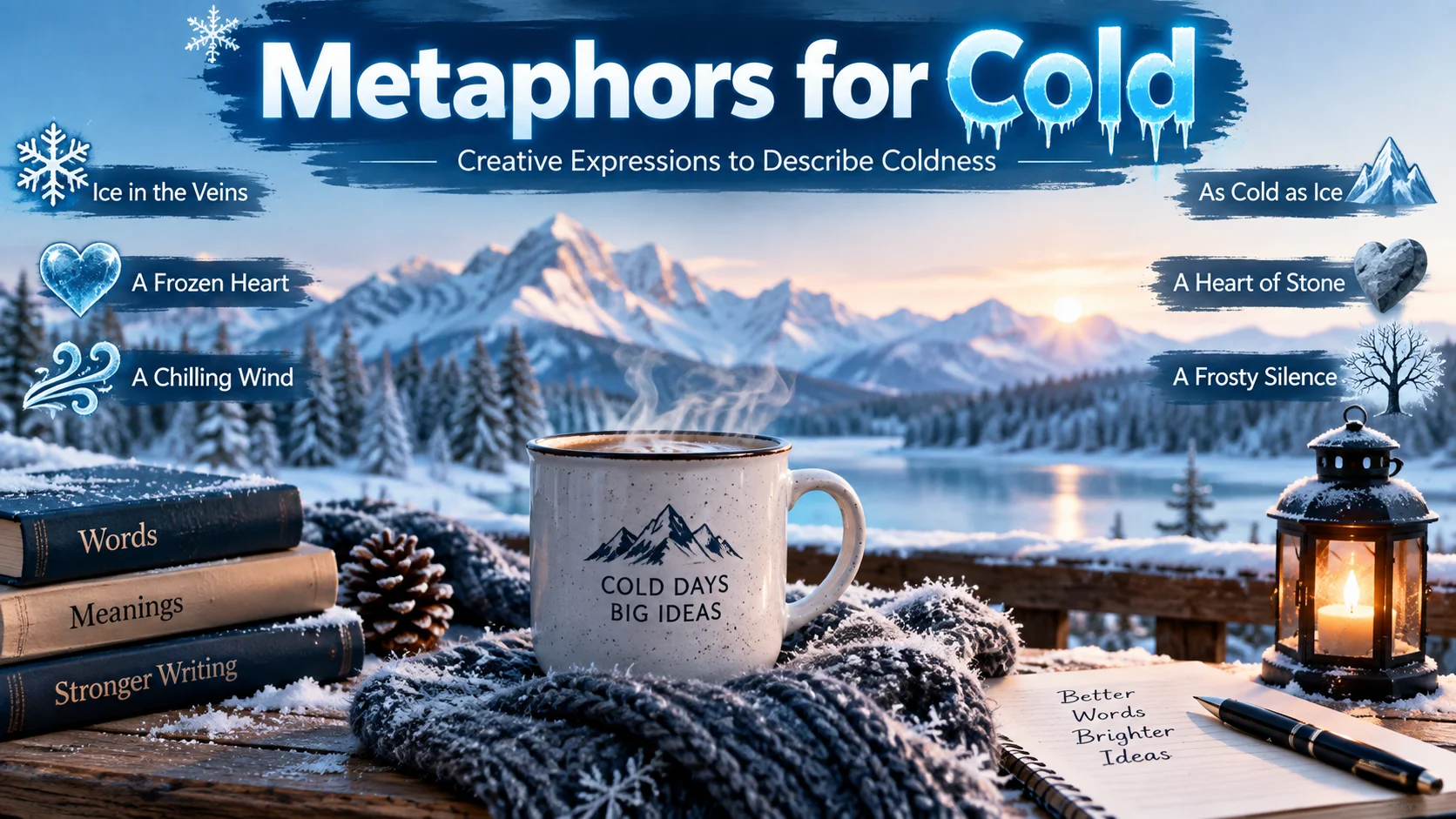
Metaphors for Cold (With Examples) turn cold weather into vivid images, making silence, distance, winter, and icy feelings easier to describe. Instead of using plain words that may sound repetitive or dull, a metaphor turns the simple idea of cold into something vivid, emotional, and memorable.
When the air bites like a wolf, the feeling becomes more intense and engaging. This approach helps students, writers, and bloggers build stronger language skills through real-life writing experience. In essays, expressive stories, immersive social media captions, and other powerful writing, metaphors create vivid images of low
In storytelling, cold can sharpen tension; in poetry, it can cradle loneliness; and in speeches, it can symbolize hardship before renewal.
Strong writing can connect the body and spirit, showing the deep symbolic value of cold as something that can wound, awaken, purify, or pause the world. Used intentionally, these descriptions can elevate ordinary descriptions into unforgettable images, making cold feel less like a temperature and more like a living force.
Lets Dive:
1. The World Was an Icebox
Meaning: This metaphor compares the surrounding world to an icebox, suggesting that everything feels extremely cold.
Detailed explanation: An icebox is associated with frozen food and very low temperatures. When you describe the world as an icebox, you create an image of a place where warmth has almost disappeared. It works especially well for freezing mornings, winter landscapes, or brutally cold environments.
Example:
“The world was an icebox, and every breath turned into a pale cloud.”
3 other ways to say it:
- The world felt frozen solid.
- Everything seemed trapped in winter.
- The air was a refrigerator without a door.
2. Winter Was a Blanket of Ice
Meaning: This metaphor presents winter as a thick layer of ice covering everything.
Detailed explanation: The image suggests that cold has spread across streets, trees, rooftops, and fields. It creates a sense of stillness and complete seasonal transformation. This metaphor fits descriptive writing because it makes winter seem like a physical covering.
Example:
“Winter was a blanket of ice, covering the rooftops before sunrise.”
3 other ways to say it:
- Winter wrapped the town in frost.
- Ice covered the landscape like a sheet.
- The season dressed everything in frozen silver.
3. The Wind Was a Knife
Meaning: This metaphor compares cold wind to a sharp knife, emphasizing how painfully it cuts through the skin.
Detailed explanation: Strong winter winds can feel sharp against your face. Calling the wind a knife transforms that physical sensation into a powerful visual image. It’s especially useful when describing biting winds, storms, or exposed outdoor spaces.
Example:
“The wind was a knife, slicing through my coat as I crossed the empty street.”
3 other ways to say it:
- The wind cut through me.
- The breeze had frozen blades.
- The air felt sharp against my skin.
4. The Morning Was a Frozen Prison
Meaning: This metaphor describes a cold morning as a prison made of ice, suggesting discomfort and confinement.
Detailed explanation: A frozen prison implies that the cold has made movement difficult or unpleasant. It can also suggest that the speaker desperately wants warmth but feels trapped inside a harsh winter environment.
Example:
“The morning was a frozen prison, keeping everyone beneath layers of blankets.”
3 other ways to say it:
- The cold held the town captive.
- Winter locked us indoors.
- The freezing air became a cage.
5. The Air Was Glass
Meaning: This metaphor compares cold air to glass, suggesting that it feels hard, brittle, clear, and fragile.
Detailed explanation: Extremely cold air can feel strangely solid even though you cannot see it. Comparing it to glass gives the atmosphere a sharp and delicate quality. This metaphor works beautifully in literary descriptions.
Example:
“The air was glass, crisp enough to make every breath feel fragile.”
3 other ways to say it:
- The air felt brittle.
- The atmosphere was frozen and transparent.
- Each breath felt like touching ice.
6. The Cold Was a Thief
Meaning: This metaphor presents cold as a thief that steals warmth.
Detailed explanation: Cold often seems to take comfort away gradually. Your fingers become numb, your body shivers, and warm spaces suddenly feel precious. Describing cold as a thief makes the sensation feel active and relentless.
Example:
“The cold was a thief, stealing the warmth from my hands one finger at a time.”
3 other ways to say it:
- The cold robbed us of comfort.
- Winter stole the heat from everything.
- The freezing air took warmth away.
7. The Room Was an Ice Cave
Meaning: This metaphor compares a cold room to an ice cave, suggesting that the temperature feels unusually low.
Detailed explanation: Ice caves are naturally associated with frozen walls, darkness, and deep chill. Calling a room an ice cave gives readers an immediate sense of coldness and discomfort.
Example:
“Without the heater, the bedroom became an ice cave before midnight.”
3 other ways to say it:
- The bedroom felt frozen.
- The house had become a winter cavern.
- The room held the chill of a glacier.
8. Her Hands Were Two Pieces of Ice
Meaning: This metaphor compares someone’s hands to pieces of ice, emphasizing how cold they feel.
Detailed explanation: This expression works well when describing a person who has been outside in freezing weather. It can also appear in affectionate writing when someone touches another person with unusually cold hands.
Example:
“Her hands were two pieces of ice when she reached for mine.”
3 other ways to say it:
- Her fingers felt frozen.
- Her hands were cold as ice.
- Her fingertips carried the chill of winter.
9. The Night Was a Frozen Ocean
Meaning: This metaphor compares a cold night to a frozen ocean, creating an image of vastness, silence, and stillness.
Detailed explanation: A frozen ocean suggests more than temperature. It can represent quietness, emptiness, distance, and darkness. This metaphor is especially effective in poetry and atmospheric storytelling.
Example:
“The night was a frozen ocean, silent beneath a sky crowded with stars.”
3 other ways to say it:
- The darkness stretched like a frozen sea.
- Night became a silent sheet of ice.
- The evening felt endless and frozen.
10. The Snow Was a White Silence
Meaning: This metaphor describes snow as silence made visible.
Detailed explanation: Fresh snow often changes the sound of an environment. Streets become quieter, footsteps soften, and familiar places appear strangely peaceful. Calling snow a white silence captures both its color and calming stillness.
Example:
“Snow settled over the village like a white silence.”
3 other ways to say it:
- The snow muted the entire town.
- Winter wrapped the streets in silence.
- The landscape became a quiet blanket of white.
Read This: 20 Metaphors for Clouds (With Examples)
11. The Cold Was a Stone Around My Heart
Meaning: This metaphor uses cold to represent emotional heaviness, sadness, or numbness.
Detailed explanation: Cold doesn’t always describe temperature. It can also describe how someone feels emotionally. A stone around the heart suggests that a person feels distant, hurt, numb, or unable to express emotion.
Example:
“After the farewell, the cold was a stone around my heart.”
3 other ways to say it:
- Grief froze my emotions.
- My heart felt trapped beneath ice.
- Sadness left me emotionally frozen.
12. His Voice Was Winter
Meaning: This metaphor compares someone’s voice to winter, suggesting that it sounds cold, distant, or unfriendly.
Detailed explanation: A person’s tone can feel emotionally cold even when the actual temperature has nothing to do with it. Calling a voice winter suggests distance, seriousness, rejection, or emotional restraint.
Example:
“His voice was winter, leaving no warmth in the conversation.”
3 other ways to say it:
- His tone was icy.
- His words carried a chill.
- His voice sounded colder than the weather.
13. The Lake Was a Sheet of Steel
Meaning: This metaphor compares a frozen lake to steel, emphasizing its hard, smooth, and cold surface.
Detailed explanation: A frozen lake can look metallic when sunlight reflects across its surface. The comparison creates an image of strength, hardness, and stillness. It works particularly well in landscape descriptions.
Example:
“At dawn, the lake became a sheet of steel beneath the pale sky.”
3 other ways to say it:
- The lake froze into a silver plate.
- Ice hardened across the water.
- The frozen lake looked metallic under the sun.
14. Frost Was Winter’s Lace
Meaning: This metaphor compares frost to delicate lace, focusing on its intricate patterns.
Detailed explanation: Frost often forms beautiful designs on windows, leaves, and branches. Although frost is cold, this metaphor highlights its beauty and delicacy rather than discomfort.
Example:
“Frost was winter’s lace, decorating every window before dawn.”
3 other ways to say it:
- Frost painted delicate patterns on the glass.
- Ice traced silver designs across the window.
- Winter embroidered the panes with frost.
15. The Cold Was a Silent Shadow
Meaning: This metaphor describes cold as a shadow that follows you quietly.
Detailed explanation: A shadow stays close without making a sound. This makes it a useful image for persistent cold that seems impossible to escape. The metaphor can also describe emotional distance or loneliness.
Example:
“The cold was a silent shadow, following me from the street into the house.”
3 other ways to say it:
- The chill followed me everywhere.
- Cold lingered like a dark shadow.
- Winter stayed close behind me.
16. The Snow Was a Sleeping Giant
Meaning: This metaphor compares a snow-covered landscape to a sleeping giant, suggesting hidden power and stillness.
Detailed explanation: Snow can make an ordinary landscape look enormous and unfamiliar. The giant image gives winter a sense of strength, mystery, and quiet power. It’s especially effective for mountains, forests, and large snowy fields.
Example:
“The mountain stood like a sleeping giant, buried beneath fresh snow.”
3 other ways to say it:
- The mountain rested beneath its frozen coat.
- Snow transformed the landscape into a giant at rest.
- Winter hid the mountain beneath a powerful white cloak.
17. The Cold Was a Locked Door
Meaning: This metaphor presents cold as a locked door that blocks warmth.
Detailed explanation: A locked door represents separation and restriction. When cold becomes a locked door, warmth feels close but unreachable. This metaphor works for both physical cold and emotional distance.
Example:
“The freezing air was a locked door, keeping the comfort of summer far away.”
3 other ways to say it:
- Cold stood between us and warmth.
- Winter shut the door on comfort.
- The chill blocked every trace of heat.
18. The Morning Was a Frosted Mirror
Meaning: This metaphor compares a cold morning to a frosted mirror, emphasizing whiteness, reflection, and obscured surroundings.
Detailed explanation: Frost can cover windows and surfaces so completely that the world outside becomes blurred. The metaphor creates a dreamlike image of winter hiding familiar scenes behind a frozen surface.
Example:
“The morning was a frosted mirror, hiding the garden behind a veil of ice.”
3 other ways to say it:
- Frost blurred the world outside.
- The windows became frozen screens.
- Ice veiled the morning landscape.
19. The Cold Was a Whispering Ghost
Meaning: This metaphor describes cold as a ghost that quietly moves through a space.
Detailed explanation: A ghost suggests something invisible yet noticeable. You can’t see cold air moving through a room, but you can certainly feel it. This metaphor captures the unseen, persistent nature of a chill.
Example:
“The cold was a whispering ghost, slipping beneath the door after sunset.”
3 other ways to say it:
- The chill crept through the room.
- Cold moved invisibly through the house.
- A ghostly draft wandered beneath the door.
20. Winter Was an Iron Fist
Meaning: This metaphor compares winter to an iron fist, emphasizing strength, severity, and harsh conditions.
Detailed explanation: An iron fist suggests something powerful and difficult to resist. When winter takes control of a landscape, roads freeze, temperatures plunge, and outdoor life becomes harder. This metaphor gives winter a forceful personality.
Example:
“Winter arrived with an iron fist, freezing the roads before sunrise.”
3 other ways to say it:
- Winter tightened its grip on the city.
- The season struck with brutal force.
- Cold ruled the landscape like a powerful hand.
MCQs:
1. “The wind was a ________, slicing through his jacket.”
A. sleeping giant
B. knife
C. white silence
D. locked door
Answer: B. knife
2. “Frost was winter’s ________, decorating the window.”
A. thief
B. prison
C. lace
D. fist
Answer: C. lace
3. “The bedroom became an ________ after the heater stopped working.”
A. ice cave
B. iron fist
C. ocean
D. shadow
Answer: A. ice cave
4. “The cold was a ________, stealing warmth from her fingers.”
A. mirror
B. thief
C. blanket
D. giant
Answer: B. thief
5. “The lake looked like a ________ beneath the morning sun.”
A. piece of lace
B. stone heart
C. sheet of steel
D. whispering ghost
Answer: C. sheet of steel
6. “The snow covered the village like a ________.”
A. white silence
B. locked door
C. knife
D. voice
Answer: A. white silence
7. “His voice was ________, leaving no warmth in the conversation.”
A. summer
B. winter
C. sunshine
D. fire
Answer: B. winter
8. “The mountain stood like a ________ beneath the snow.”
A. sleeping giant
B. silent shadow
C. glass
D. thief
Answer: A. sleeping giant
9. “The cold was a ________, following me from room to room.”
A. frosted mirror
B. silent shadow
C. sheet of steel
D. white blanket
Answer: B. silent shadow
10. “The morning was a ________, hiding the garden behind frost.”
A. frozen prison
B. frosted mirror
C. knife
D. thief
Answer: B. frosted mirror
11. “After the argument, the cold became a ________ around his heart.”
A. stone
B. blanket
C. lake
D. window
Answer: A. stone
12. “The freezing air was a ________, separating us from the warmth inside.”
A. sleeping giant
B. locked door
C. lace
D. mirror
Answer: B. locked door
13. “The cold slipped beneath the door like a ________.”
A. whispering ghost
B. sheet of steel
C. white silence
D. blanket of ice
Answer: A. whispering ghost
14. “Winter arrived with an ________, freezing roads and shutting down travel.”
A. iron fist
B. ice cave
C. glass
D. shadow
Answer: A. iron fist
15. “The entire world felt like an ________ before sunrise.”
A. icebox
B. ocean
C. mirror
D. stone
Answer: A. icebox
FAQs:
What is a metaphor for cold?
A metaphor for cold describes cold by comparing it directly with something else without using “like” or “as.” For example, “the wind was a knife” compares harsh wind with a sharp blade.
What is a creative metaphor for extremely cold weather?
“The world was an icebox” is a simple and vivid metaphor for extremely cold weather. Other options include “winter was an iron fist” and “the room was an ice cave.”
What metaphor describes emotional coldness?
For emotional coldness, “the cold was a stone around my heart” works well. Other choices include “his voice was winter” and “the cold was a locked door.”
What is a poetic metaphor for winter?
“Winter was a blanket of ice” is a poetic metaphor that presents the season as something covering the world. “Winter’s lace” can describe delicate frost patterns.
Why should writers use metaphors for cold?
Metaphors make descriptions more vivid, emotional, and memorable. Instead of simply stating that something is cold, you can help readers imagine the sensation through images such as ice, steel, knives, ghosts, or winter.
Conclusion:
Metaphors for Cold (With Examples) can make ordinary descriptions more vivid, emotional, and memorable. Instead of simply saying that the weather is cold, you can describe the wind as a blade, the air as a biting force, or winter as a silent landlord collecting warmth.
These creative comparisons help readers imagine the physical feeling of cold while also expressing emotions such as loneliness, fear, distance, silence, and isolation. Whether you’re writing an essay, poem, story, speech, caption, or descriptive passage, the right metaphor can give your words more depth and personality.
Understanding the difference between metaphors and similes can also help you choose stronger expressions for different situations. With practice, you can use cold-related imagery naturally and confidently. The key is to choose comparisons that fit your message, create a clear mental picture, and make your writing feel fresh rather than repetitive.














1 thought on “20 Metaphors for Cold (With Examples)”