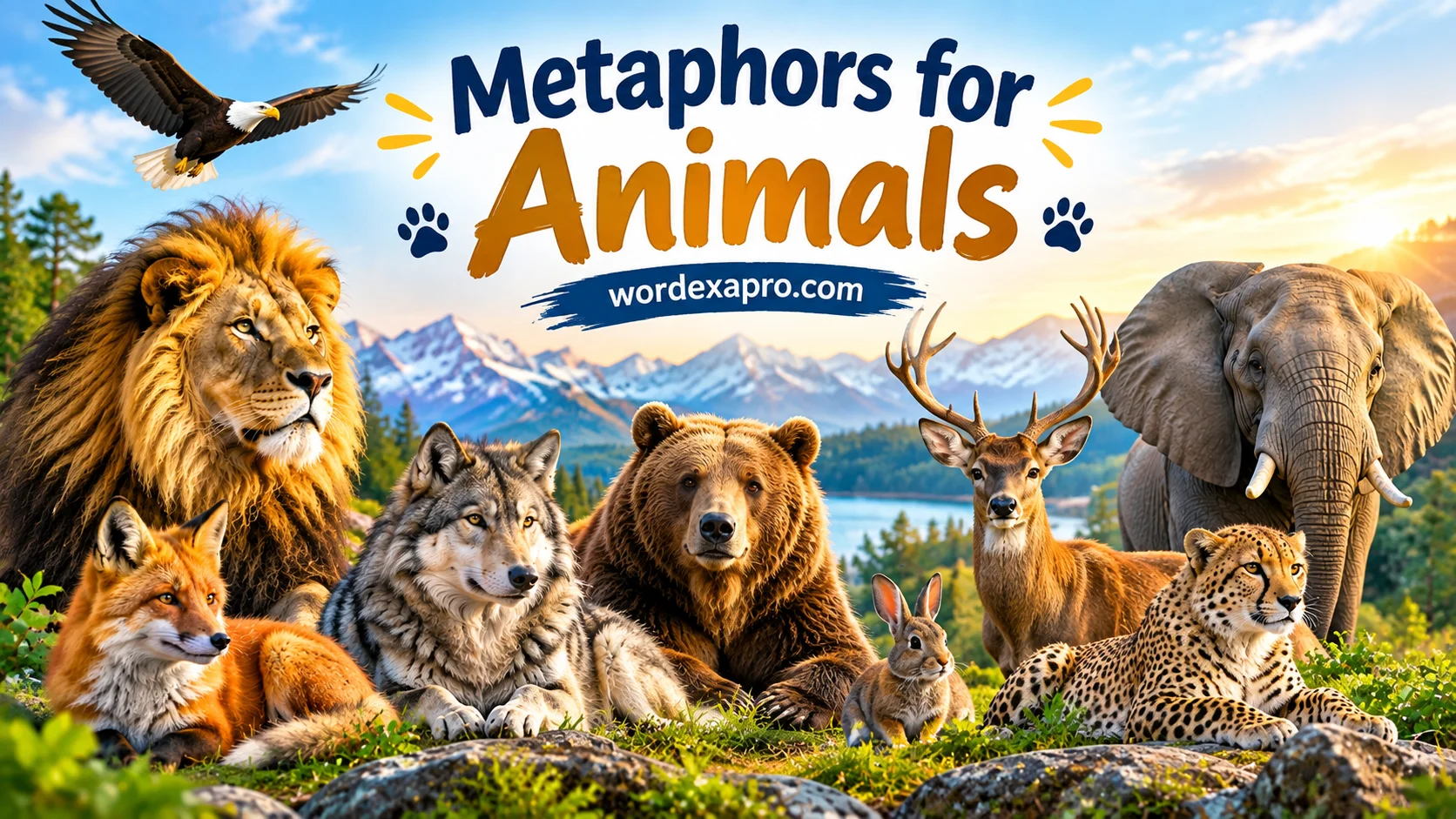
Metaphors for Animals (With Examples) make ordinary descriptions vivid by connecting human emotions with familiar animal traits in simple ways.
Animal metaphors are the heartbeat of vivid writing because they transform ordinary descriptions into emotional experiences. Through comparing, a metaphor creates an unexpected, imaginative picture filled with symbolic color and emotional depth. These powerful expressions carry strong meanings influenced by human culture, storytelling, myths, poetry, novels, speeches, fiction, and essays.
A wolf can suggest cunning and independence, while a dove represents peace and innocence. Writers use these comparisons as mirrors of human emotion, instinct, and personality, allowing the reader’s imagination to picture a frightened character as a rabbit or a determined leader as a hawk.
This gives language a stronger mood, richer meaning, greater texture, and deeper symbolism, creating emotional intensity that makes a simple sentence feel unforgettable.
Lets Dive In:
1. A Lion in the Wild
Meaning: A lion represents courage, confidence, strength, and leadership.
This metaphor compares a person or animal to a lion because lions have long symbolized bravery and authority. When you call someone a lion in the wild, you’re suggesting that they remain fearless even when circumstances become difficult. The image also conveys independence because a lion doesn’t appear timid when facing challenges.
This metaphor works especially well when describing someone who protects others or stands firmly under pressure. It can also describe a determined athlete, leader, parent, or friend.
Example:
“During the crisis, Maya became a lion in the wild, protecting everyone around her.”
Three other ways to say it:
- As brave as a lion
- A fearless leader
- A symbol of courage
2. A Fox in the Henhouse
Meaning: A fox in the henhouse represents a clever or dangerous person placed among vulnerable people.
This metaphor comes from the natural relationship between foxes and chickens. A fox entering a henhouse creates immediate danger because the chickens have little power to defend themselves. In figurative language, the expression describes someone whose presence creates risk because they may take advantage of others.
The metaphor can describe a dishonest employee, manipulative person, or outsider who has gained access to something valuable. It carries a warning and usually has a negative tone.
Example:
“Putting the dishonest manager in charge of the finances was like placing a fox in the henhouse.”
Three other ways to say it:
- A wolf among sheep
- A threat hiding nearby
- Danger in disguise
3. A Puppy With a Heart of Gold
Meaning: This metaphor represents innocence, affection, playfulness, and deep kindness.
A puppy often creates an image of excitement, warmth, curiosity, and unconditional affection. When you describe someone as a puppy with a heart of gold, you’re emphasizing their gentle nature and sincere care for others.
This metaphor suits children, close friends, affectionate pets, or anyone whose cheerful personality makes people feel comfortable. It carries a warm and caring emotional tone.
Example:
“Leo may be energetic and mischievous, but he’s a puppy with a heart of gold.”
Three other ways to say it:
- A bundle of affection
- A gentle and playful soul
- A sweetheart with endless energy
4. A Wise Old Owl
Meaning: A wise old owl represents wisdom, knowledge, patience, and thoughtful judgment.
Owls frequently symbolize wisdom because of their calm appearance and association with observation. Calling someone a wise old owl suggests that they think carefully before speaking or acting.
The metaphor works particularly well for teachers, grandparents, mentors, counselors, and experienced friends. It can also describe someone who quietly watches a situation before offering useful advice.
Example:
“Grandpa sat quietly through the argument, then spoke like a wise old owl.”
Three other ways to say it:
- A fountain of wisdom
- A thoughtful mentor
- An experienced guide
5. A Busy Bee
Meaning: A busy bee represents someone who works actively, stays productive, and rarely sits still.
Bees spend much of their time collecting nectar, building their hive, and supporting their colony. Because of this, the bee has become a familiar image of productivity and constant activity.
Calling someone a busy bee usually carries an affectionate tone. It suggests that the person has many tasks and keeps moving from one responsibility to another.
Example:
“Sarah has been a busy bee all morning, preparing meals and organizing the house.”
Three other ways to say it:
- A tireless worker
- Always on the move
- A bundle of productivity
6. A Butterfly in a Storm
Meaning: A butterfly in a storm represents fragility, beauty, and resilience during difficult circumstances.
A butterfly looks delicate, yet the metaphor becomes powerful when you place it inside a storm. The contrast between softness and danger suggests someone who faces overwhelming circumstances without losing their identity or hope.
This metaphor works especially well in emotional writing. It can describe a sensitive person dealing with pressure, grief, uncertainty, or major change.
Example:
“She moved through the difficult year like a butterfly in a storm, fragile but unwilling to give up.”
Three other ways to say it:
- A delicate spirit facing hardship
- Beauty surviving chaos
- A fragile soul with quiet strength
7. A Snake in the Grass
Meaning: A snake in the grass represents hidden danger, betrayal, or someone whose harmful intentions aren’t immediately visible.
The image comes from a snake hiding among grass. You might walk past it without realizing the danger nearby. Figuratively, the expression describes someone who appears harmless while secretly planning something harmful.
Use this metaphor carefully because it has a strongly negative meaning. It fits stories about deception, betrayal, manipulation, or hidden motives.
Example:
“I trusted him completely, but he turned out to be a snake in the grass.”
Three other ways to say it:
- A hidden threat
- A secret betrayer
- Danger beneath a harmless appearance
8. A Horse With Endless Energy
Meaning: This metaphor represents stamina, determination, endurance, and relentless movement.
Horses have traditionally represented strength and physical endurance. Describing someone as a horse with endless energy creates an image of a person who keeps working long after others become tired.
You can use this metaphor for athletes, workers, children, travelers, or anyone who seems to have an unlimited supply of energy.
Example:
“Even after hiking for six hours, Daniel kept walking like a horse with endless energy.”
Three other ways to say it:
- A tireless worker
- Full of stamina
- An unstoppable force
9. A Gentle Dove
Meaning: A gentle dove represents peace, kindness, innocence, and calmness.
Doves commonly symbolize peace. When you call someone a gentle dove, you highlight their peaceful nature and their tendency to avoid unnecessary conflict.
This metaphor can describe a compassionate friend, a peaceful child, or someone who brings calm into tense situations. It works particularly well in emotional and reflective writing.
Example:
“Amelia entered the argument like a gentle dove, calming everyone with her soft voice.”
Three other ways to say it:
- A peaceful soul
- A calming presence
- A symbol of kindness
10. A Wolf at the Door
Meaning: A wolf at the door represents danger, pressure, fear, or an urgent problem that can’t be ignored.
The image of a wolf waiting outside a home creates a sense of immediate threat. Figuratively, the metaphor can describe financial pressure, personal difficulties, fear, or any serious problem approaching someone.
Unlike simply calling something difficult, a wolf at the door makes the situation feel immediate. It suggests that the problem is close and requires attention.
Example:
“With the bills piling up, financial stress felt like a wolf at the door.”
Three other ways to say it:
- A threat on the horizon
- Pressure closing in
- An urgent danger
Read This: 20 Metaphors for Angry (With Examples)
11. A Peacock on the Stage
Meaning: A peacock on the stage represents someone who proudly displays their appearance, talents, achievements, or status.
Peacocks are famous for displaying their colorful feathers. That visual behavior creates a natural metaphor for people who enjoy attention or proudly showcase what they have accomplished.
This metaphor can be playful rather than insulting. Context determines whether it sounds admiring, humorous, or critical.
Example:
“At the celebration, Marcus was a peacock on the stage, proudly showing everyone his new invention.”
Three other ways to say it:
- A natural show-off
- Center-stage personality
- Proudly displaying their talents
12. An Ant Carrying the World
Meaning: An ant carrying the world represents hard work, responsibility, persistence, and carrying more than one’s share.
Ants are small creatures that can carry objects much larger than their bodies. This makes them powerful symbols of persistence and determination.
Calling someone an ant carrying the world adds emotional depth. It can describe a parent supporting a family, an employee handling endless responsibilities, or a friend who constantly helps others.
Example:
“After taking care of everyone for years, she felt like an ant carrying the world.”
Three other ways to say it:
- Carrying a heavy burden
- A tireless provider
- Someone carrying enormous responsibility
13. A Chameleon in a Crowd
Meaning: A chameleon in a crowd represents someone who adapts quickly to different environments or changes their behavior to fit in.
Chameleons are associated with changing their appearance. In figurative language, this creates an image of someone who adjusts their personality, style, or behavior depending on the people around them.
The metaphor can have a positive or negative meaning. Adaptability can be a valuable skill, but constantly changing to please others can suggest a lack of authenticity.
Example:
“At every new workplace, Jenna became a chameleon in a crowd, quickly learning how everyone communicated.”
Three other ways to say it:
- Highly adaptable
- Able to blend into any environment
- A social shape-shifter
14. A Bear With a Soft Heart
Meaning: A bear with a soft heart represents someone who looks strong or intimidating but is actually caring and gentle.
Bears often create an image of physical strength and power. Adding a soft heart changes the emotional meaning. The metaphor highlights the contrast between outward toughness and inner tenderness.
This expression works beautifully for protective parents, large dogs, quiet friends, or people who appear serious but care deeply.
Example:
“Don’t let his serious expression fool you; he’s a bear with a soft heart.”
Three other ways to say it:
- Tough outside, tender inside
- A gentle giant
- Strong but deeply caring
15. A Hummingbird in the Garden
Meaning: A hummingbird in the garden represents energy, beauty, curiosity, and joyful movement.
Hummingbirds move quickly and gracefully. Their small size and vivid presence make them an appealing metaphor for someone who brings energy into a quiet environment.
You can use this metaphor when describing a cheerful person whose presence makes a room feel more lively. It also works well for someone who moves quickly from one task or interest to another.
Example:
“She moved through the party like a hummingbird in a garden, greeting everyone with bright enthusiasm.”
Three other ways to say it:
- A spark of energy
- A lively presence
- A burst of joyful movement
16. A Turtle With a Strong Shell
Meaning: A turtle with a strong shell represents emotional protection, patience, resilience, and quiet strength.
A turtle carries its protective shell wherever it goes. This makes it a fitting metaphor for someone who protects their emotions while continuing forward at their own pace.
The metaphor doesn’t necessarily mean someone is cold. Instead, it can suggest that a person has learned to protect themselves because life has taught them to be careful.
Example:
“After years of disappointment, he became a turtle with a strong shell, cautious but still moving forward.”
Three other ways to say it:
- Emotionally guarded
- Quietly resilient
- Protected but persistent
17. A Swan on Still Water
Meaning: A swan on still water represents grace, elegance, calmness, and hidden effort.
A swan appears peaceful as it glides across water. Beneath the surface, however, its feet work continuously. This creates a powerful metaphor for someone who looks calm while working hard behind the scenes.
Use this expression when describing someone who handles pressure without showing how much effort they’re making.
Example:
“She managed the entire event with the calmness of a swan on still water.”
Three other ways to say it:
- Grace under pressure
- Calm on the surface
- Quietly working beneath the surface
18. An Eagle Above the Clouds
Meaning: An eagle above the clouds represents freedom, vision, ambition, confidence, and a broad perspective.
Eagles fly high and can observe landscapes from above. This makes them a strong metaphor for people who think beyond immediate problems and pursue ambitious goals.
Calling someone an eagle above the clouds suggests that they aren’t trapped by small concerns. They look farther ahead and maintain a larger vision.
Example:
“While everyone argued about minor details, Omar remained an eagle above the clouds, focused on the bigger goal.”
Three other ways to say it:
- A visionary thinker
- Someone with a broad perspective
- A person who aims high
19. A Rabbit in a Garden
Meaning: A rabbit in a garden represents innocence, gentleness, nervous energy, or vulnerability.
Rabbits often evoke an image of a small, alert creature that responds quickly to unfamiliar sounds. This makes the metaphor useful for describing someone who is shy, cautious, or easily startled.
The metaphor can also communicate charm and tenderness. Its meaning depends heavily on the surrounding context.
Example:
“At the unfamiliar gathering, Noah looked like a rabbit in a garden, quietly observing everyone.”
Three other ways to say it:
- Shy and cautious
- A nervous but gentle presence
- Quietly alert
20. A Dog With a Faithful Heart
Meaning: A dog with a faithful heart represents loyalty, devotion, companionship, trust, and unconditional affection.
Dogs are widely associated with loyalty and companionship. When you call someone a dog with a faithful heart, you’re emphasizing their commitment to the people they love.
This metaphor works especially well when expressing appreciation for a dependable friend, family member, or companion. It highlights emotional consistency rather than dramatic gestures.
Example:
“Through every difficult season, he stayed beside me like a dog with a faithful heart.”
Three other ways to say it:
- Deeply loyal companion
- Faithful friend
- Someone who never abandons those they love
MCQs:
1. What does the metaphor “a lion in the wild” usually represent?
A. Fear and confusion
B. Courage and strength
C. Laziness and boredom
D. Shyness and nervousness
Answer: B. Courage and strength
2. What does “a wise old owl” suggest about a person?
A. They are careless.
B. They are very loud.
C. They are knowledgeable and thoughtful.
D. They avoid learning.
Answer: C. They are knowledgeable and thoughtful.
3. Which metaphor best represents productivity and constant activity?
A. A gentle dove
B. A sleepy turtle
C. A busy bee
D. A quiet rabbit
Answer: C. A busy bee
4. What does “a snake in the grass” usually communicate?
A. Hidden danger or betrayal
B. Peace and friendship
C. Wisdom and patience
D. Energy and happiness
Answer: A. Hidden danger or betrayal
5. What does “a bear with a soft heart” describe?
A. Someone who is always frightened
B. Someone who never helps others
C. Someone who appears strong but is caring
D. Someone who avoids people
Answer: C. Someone who appears strong but is caring
6. Which animal metaphor represents peace and kindness?
A. Fox
B. Wolf
C. Dove
D. Peacock
Answer: C. Dove
7. What does “an eagle above the clouds” symbolize?
A. Confusion and weakness
B. Vision, ambition, and freedom
C. Laziness and fear
D. Dishonesty and deception
Answer: B. Vision, ambition, and freedom
8. Which metaphor represents someone who adapts to different environments?
A. Lion in the wild
B. Chameleon in a crowd
C. Bear with a soft heart
D. Dog with a faithful heart
Answer: B. Chameleon in a crowd
9. What does “a dog with a faithful heart” emphasize?
A. Loyalty and devotion
B. Vanity and pride
C. Fear and uncertainty
D. Ambition and independence
Answer: A. Loyalty and devotion
10. What does “a butterfly in a storm” suggest?
A. Physical strength only
B. Fragility combined with resilience
C. Dishonesty and manipulation
D. Excessive pride
Answer: B. Fragility combined with resilience
11. Which metaphor describes someone carrying many responsibilities?
A. Peacock on the stage
B. Hummingbird in the garden
C. Ant carrying the world
D. Dove on a branch
Answer: C. Ant carrying the world
12. What does “a turtle with a strong shell” represent?
A. Recklessness
B. Protection, patience, and resilience
C. Attention-seeking behavior
D. Aggression and danger
Answer: B. Protection, patience, and resilience
13. Which metaphor best represents elegance and calmness?
A. Fox in the henhouse
B. Busy bee
C. Swan on still water
D. Snake in the grass
Answer: C. Swan on still water
14. What does “a peacock on the stage” usually suggest?
A. Someone who avoids attention
B. Someone who is extremely shy
C. Someone who proudly displays their talents or appearance
D. Someone who quietly observes others
Answer: C. Someone who proudly displays their talents or appearance
15. Which metaphor best describes a shy, nervous, or vulnerable person?
A. Rabbit in a garden
B. Eagle above the clouds
C. Lion in the wild
D. Horse with endless energy
Answer: A. Rabbit in a garden
FAQs:
What is a metaphor for an animal?
A metaphor for an animal compares a person, personality trait, behavior, or situation directly to an animal without using “like” or “as.” For example, “She is a lion” can represent courage and confidence.
What is a common animal metaphor for courage?
“A lion” is one of the most recognizable metaphors for courage. It suggests bravery, strength, confidence, and leadership.
What animal metaphor represents loyalty?
A dog with a faithful heart can represent loyalty, devotion, trust, and companionship. It works particularly well when describing a dependable friend or loved one.
What animal metaphor represents wisdom?
A wise old owl commonly represents wisdom, knowledge, experience, and careful judgment. It’s especially useful when describing a teacher, mentor, elder, or experienced person.
How can animal metaphors improve writing?
Animal metaphors make descriptions more vivid and memorable. Instead of simply saying someone is brave, you can call them a lion, giving readers an immediate mental image of courage and strength.
Conclusion:
Metaphors for Animals (With Examples) make everyday language more vivid, memorable, and meaningful. They allow us to describe people, emotions, behavior, and situations through familiar animal traits.
A brave lion can represent courage, while a sly fox can suggest cleverness. Similarly, a busy bee may describe someone hardworking, and a dove can symbolize peace and innocence. These simple comparisons add color, emotion, imagination, and clarity to ordinary sentences. They also make difficult or abstract ideas easier for young learners and readers to understand.
From poetry and storytelling to movies and everyday conversations, animal metaphors continue to make communication more expressive. When used with the right context, they can create strong mental pictures and help readers connect with an idea quickly. Whether you are writing an essay, telling a story, or speaking casually, these metaphors can give your words greater personality and impact.










1 thought on “20 Metaphors for Animals (With Examples)”